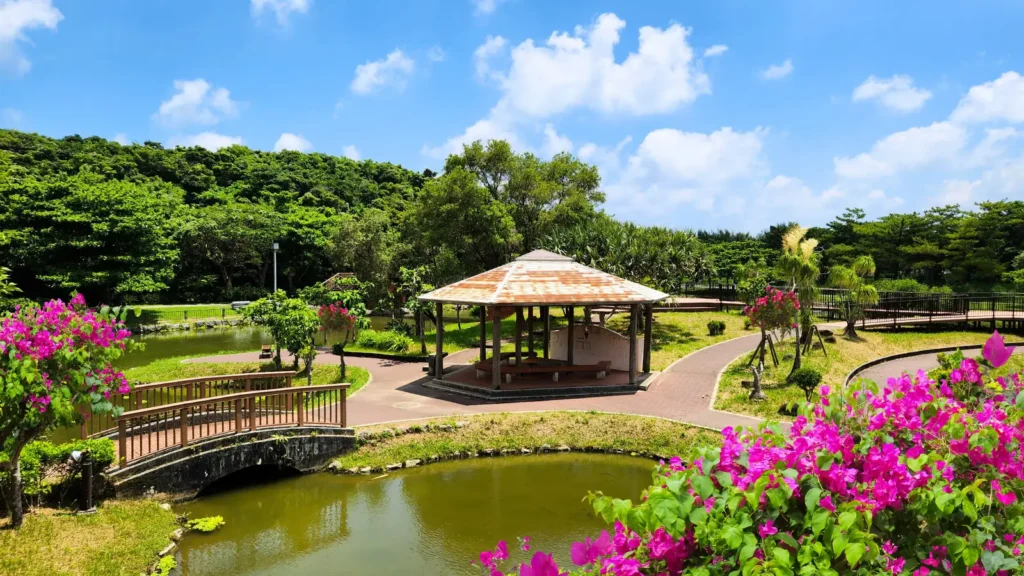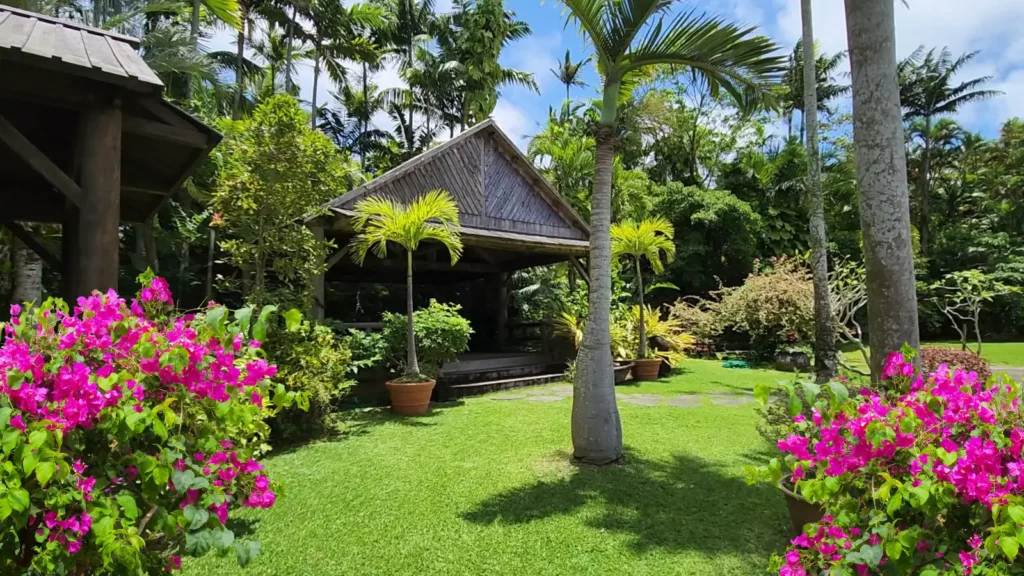
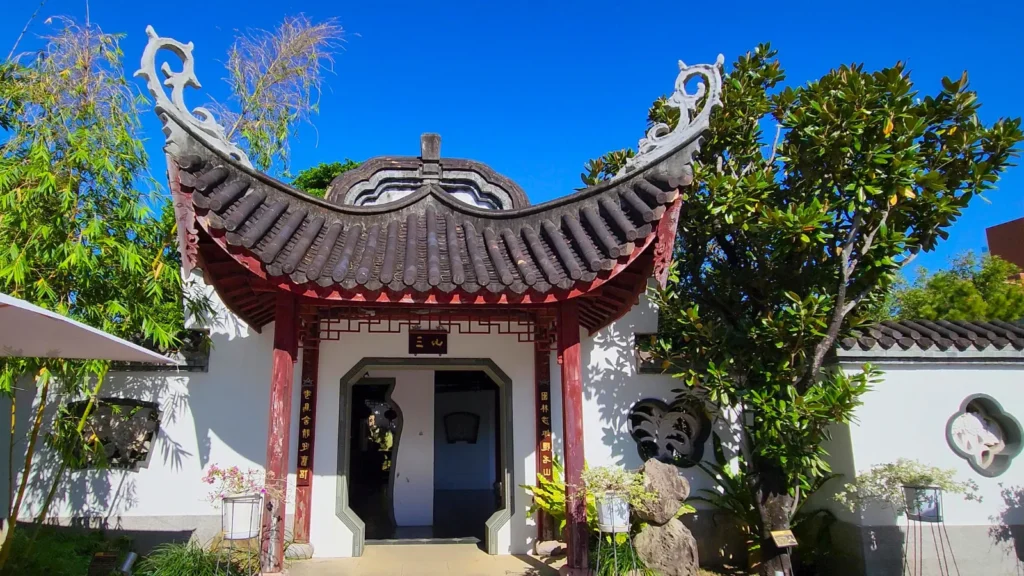
Located just a few minutes from downtown Naha, Fukushuen is a Chinese inspired garden unique in Okinawa. Designed as a space for walking and contemplation, it offers a peaceful break away from urban activity while telling a deep story of cultural ties and exchanges between peoples.
A Chinese Garden Born from a Historic Friendship
Fukushuen was created to celebrate the long standing relationship between the city of Naha and the Chinese city of Fuzhou, in Fujian Province. These two port cities share a common history marked by commercial, cultural, and human exchanges, particularly through the Kume community, established in Okinawa for several centuries.
This Chinese garden is not only decorative. It acts as a living symbol of this lasting friendship, embedded in the urban landscape of Naha.
A surface designed as a walking route
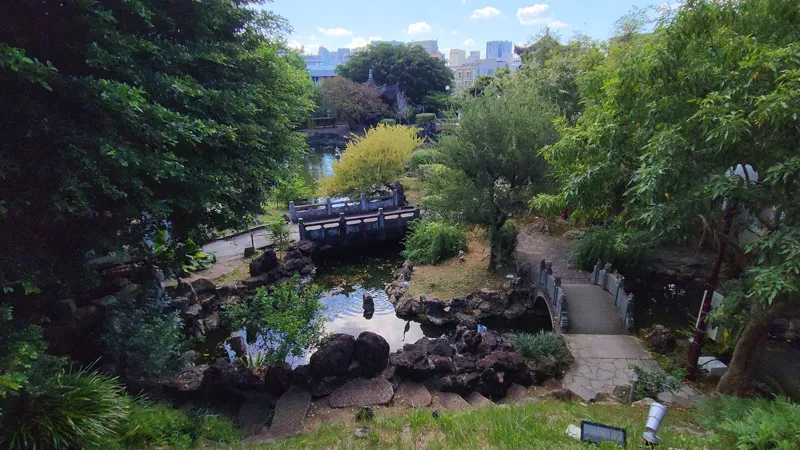
The park covers more than 8,500 square meters, including its surrounding walls.
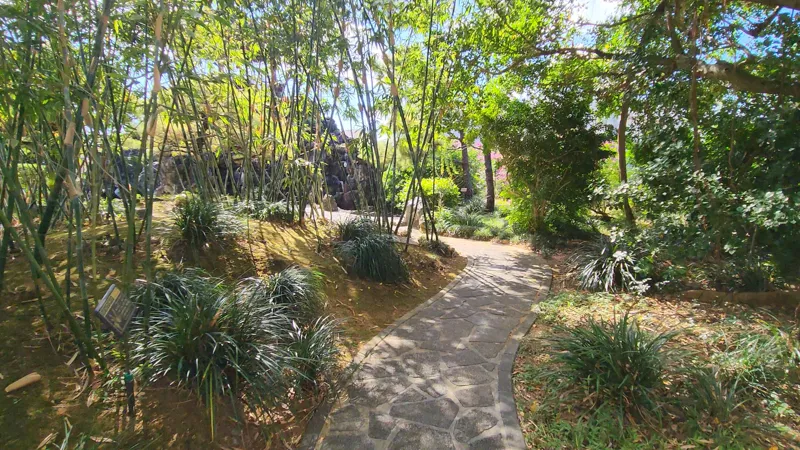
The entire area is designed as a continuous walking path, with no fixed route. Visitors move at their own pace, gradually discovering the spaces through changing perspectives, openings, and landscape transitions.
Three open areas, several seasonal landscapes, and carefully placed viewpoints structure the visitor experience.
Architecture faithful to the traditions of Fuzhou
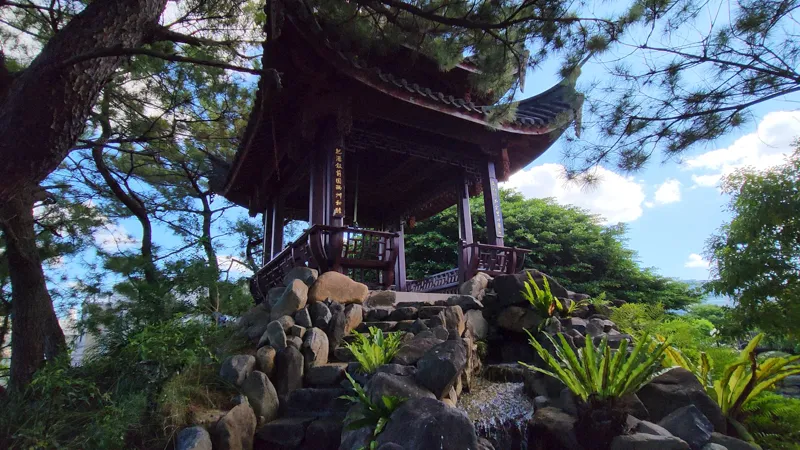
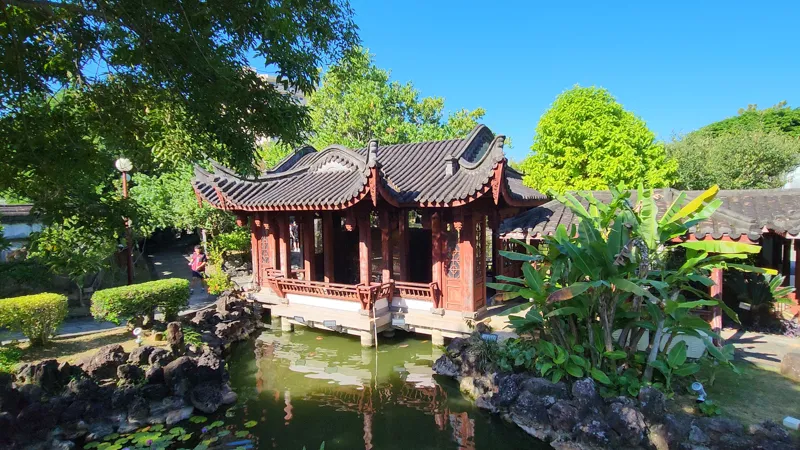
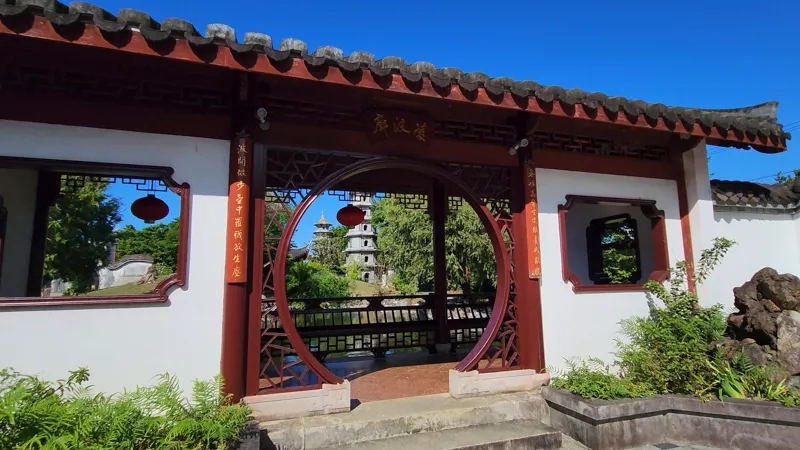
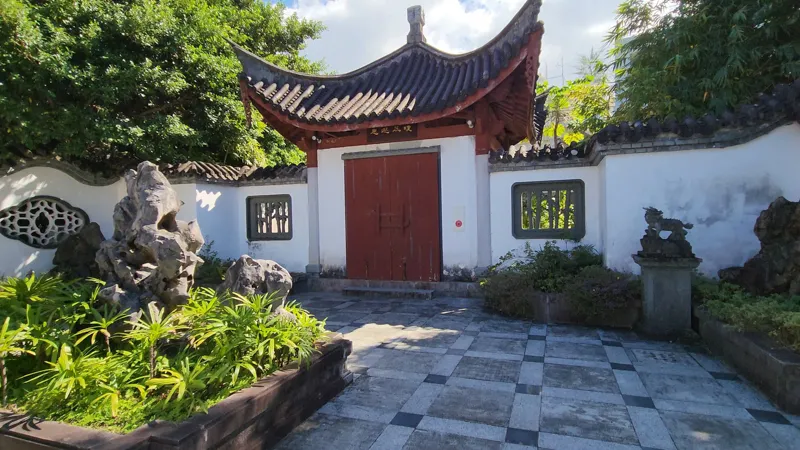
The buildings and pavilions of Fukushuen were designed according to traditional methods from the Fuzhou region. Wood and stone play a central role. The entrances are oriented toward the four cardinal directions, and each structure has its own architectural characteristics.
Decorative windows integrated into the walls play an essential role. They reveal the garden through successive sequences, creating a sense of openness while guiding the viewer’s eye.
Symbolic landscapes carefully staged
This Chinese garden integrates many elements inspired by the emblematic landscapes of Fuzhou.
Among them are:
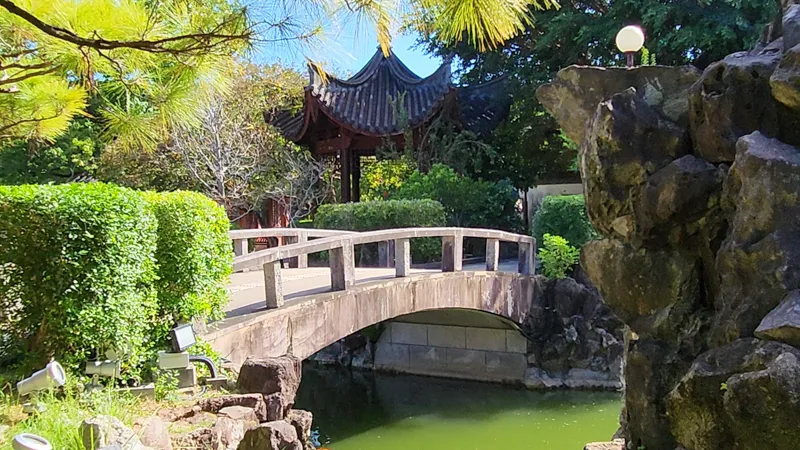
- symbolic mountains represented through landscape composition
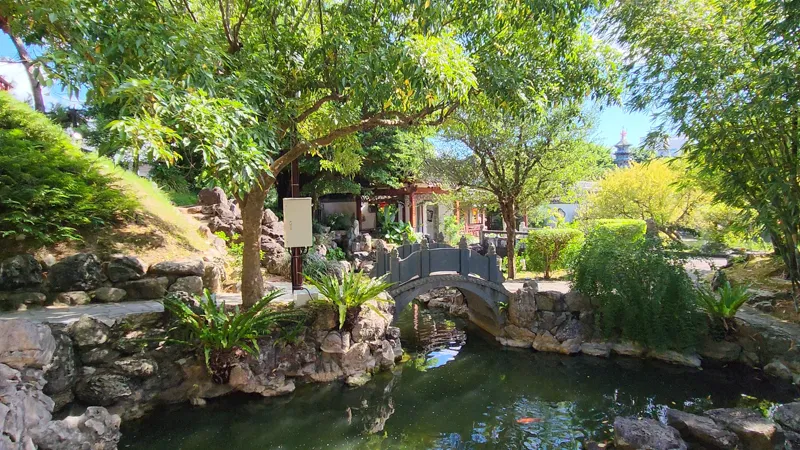
- ponds, springs, and water features that encourage calm
- a decorative artificial cave, the Mon Ye Cave, designed as a place of transition and contemplation
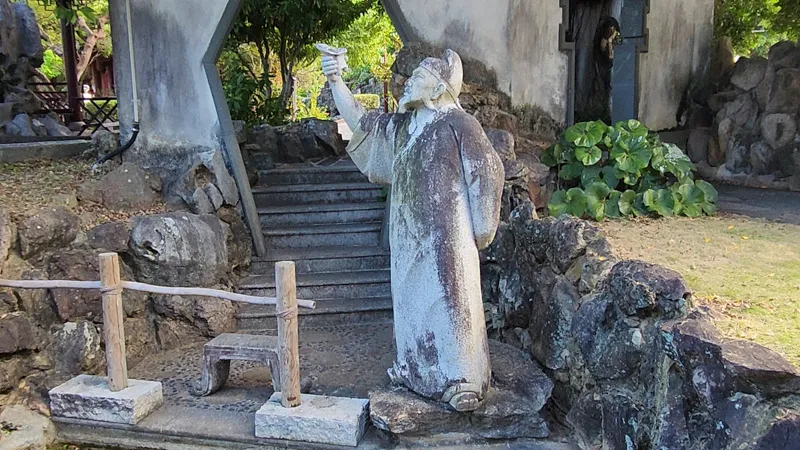
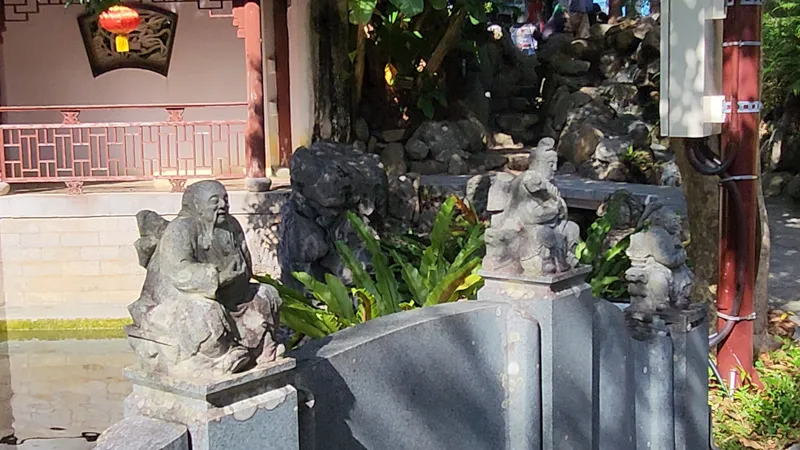
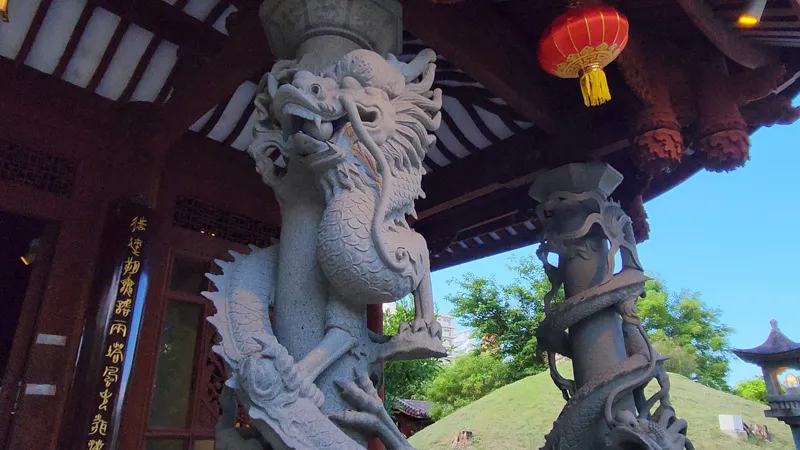
- stone sculptures, including dragon pillars and traditional figures
Each element is deliberately staged to create an aesthetic and meditative experience.
The Lingbo Corridor and the evocation of the seasons
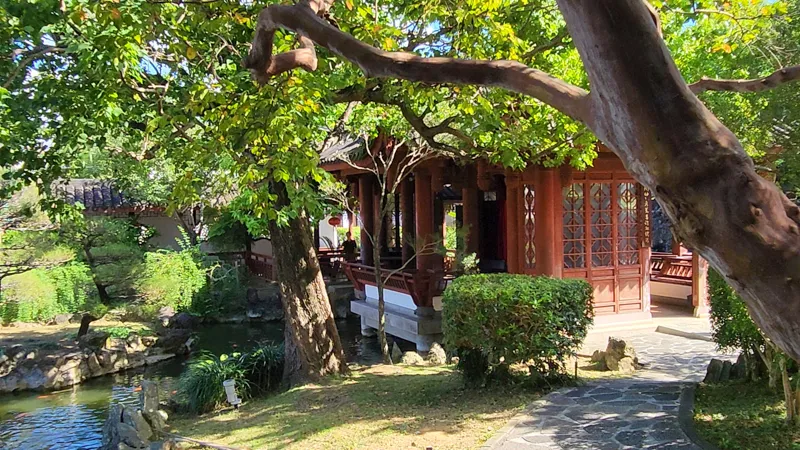
The Lingbo Corridor runs along a stream lined with peach trees. This passage acts as an observation platform, particularly expressive in spring, when the blossoms announce the renewal of the season.
Other pavilions also evoke the cycle of the seasons, such as the Spring Pavilion, whose circular shape symbolizes harmony, or the Pavilion of Pines and Bamboo, associated with summer, shade, and freshness.
Twin pagodas, a symbol of balance
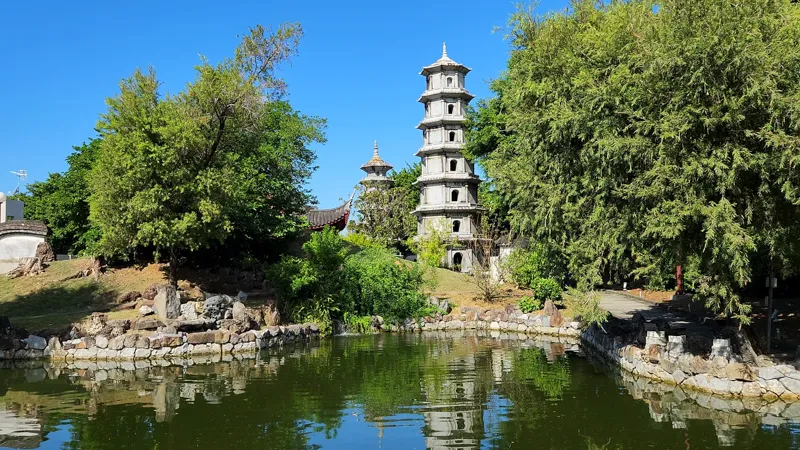
The twin pagodas, the White Pagoda and the Bird Pagoda, are inspired by existing models in Fuzhou. Made of stone, they represent traditional regional landscapes in miniature and contribute to the visual balance of this Chinese garden.
They recall the importance of symmetry and harmony in classical Chinese architecture.
A space of calm in the heart of the city
Today, Fukushuen is both a cultural site and a place of relaxation for the residents of Naha. The garden offers a moment of breathing space within the city, suited to slow walking, observation, and rest.
Each season subtly transforms the atmosphere of the park, making every visit different.
Why visit the Fukushuen Chinese Garden?
Fukushuen is an ideal place to:
- discover a traditional Chinese garden without leaving Okinawa
- understand the historical links between Naha and Fuzhou
- enjoy a calm and structured space for a contemplative walk
- observe architecture and landscape as a coherent whole
- This Chinese garden is among the essential places to visit in Okinawa.
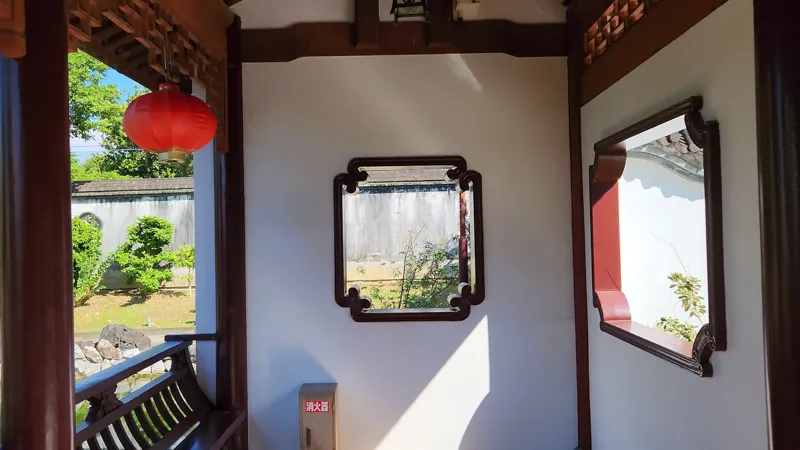
Visit the Fukushuen Chinese Garden on video
A video available on my YouTube channel allows viewers to discover Fukushuen Garden through a filmed walk.
It offers an overview of the park’s atmosphere, its architecture, and its landscapes, helping viewers better imagine the visit before going there in person.
To further explore the emblematic sites to visit during a trip to Okinawa, a dedicated category brings together places with a strong cultural dimension, such as Native Okinawa Village, Murasaki Mura, and American village.
Texts, images, and videos © Japan Okinawa Daily Life
Copying, downloading, and reuse prohibited without permission