Kitanakagusuku Ruins: Coral Limestone Walls
Why are these ruins important?
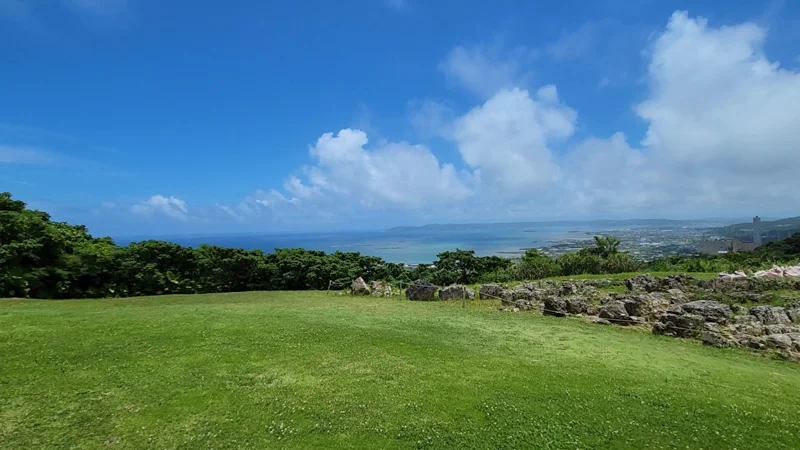
At the top of a ridge overlooking the bay of Nakagusuku city, the Kitanakagusuku Ruins refer to the site of Nakagusuku-jō (which means Nakagusuku Castle).
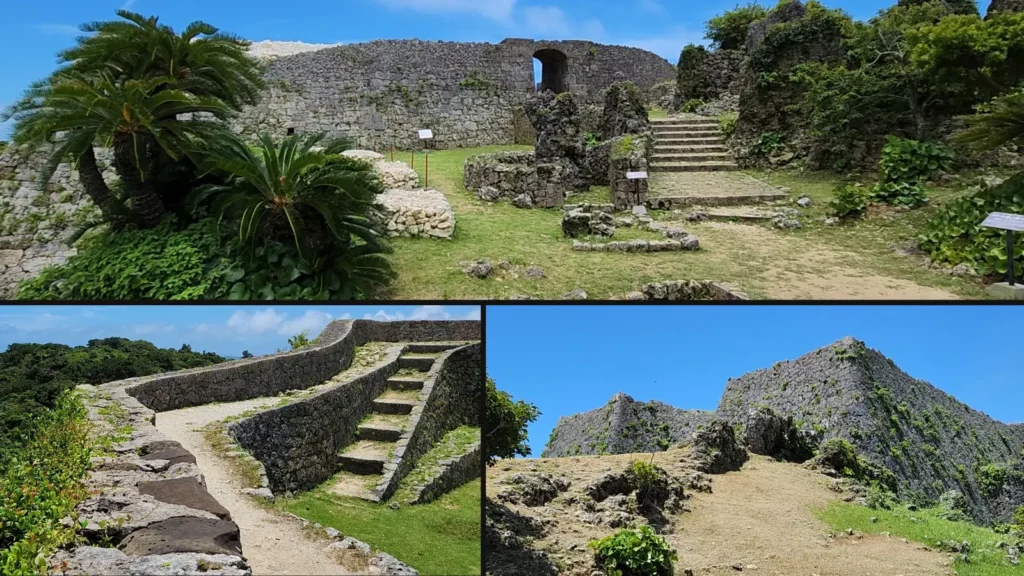
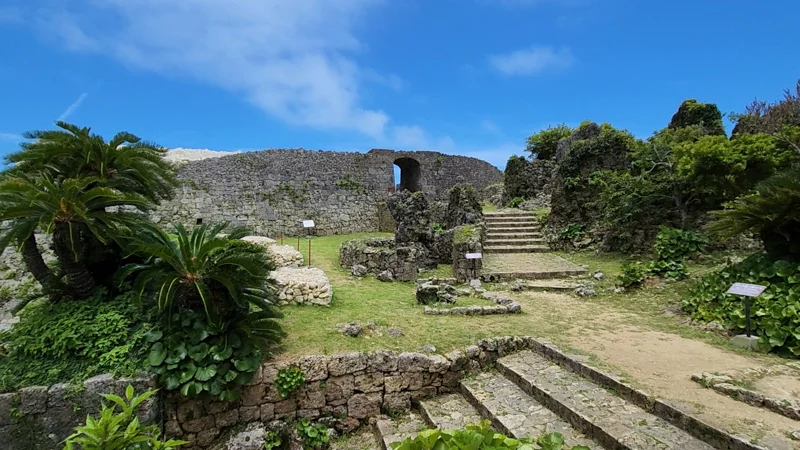
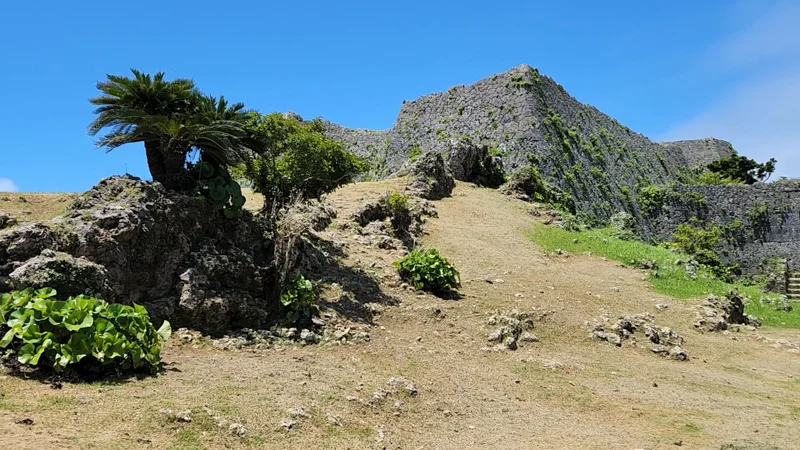
The remains of castles and sacred places called “Gusuku” are part of a larger ensemble listed by UNESCO. Since the year 2000, several castles and sacred places in Okinawa have been grouped under the official name “Gusuku Sites and Related Properties of the Kingdom of Ryūkyū.” This ensemble highlights coral limestone architecture and the curved layout of the walls, two unique features of Gusuku and Okinawan culture.
Reminder: Ryūkyū and the “Gusuku”
The Ryūkyū Kingdom was born in the 15th century from the unification of the island’s three principalities. Its prosperity relied on regional trade with China, Korea, Japan, and Southeast Asia, shaping an original culture. In this context, gusuku were perched complexes, surrounded by embankments and especially by stone walls. Current research sees them as having mixed functions: defense, prestigious residences, and village sacred sites, many still containing utaki (sacred spaces). The peak of gusuku is placed in the 14th–15th centuries.
A castle with six enclosures
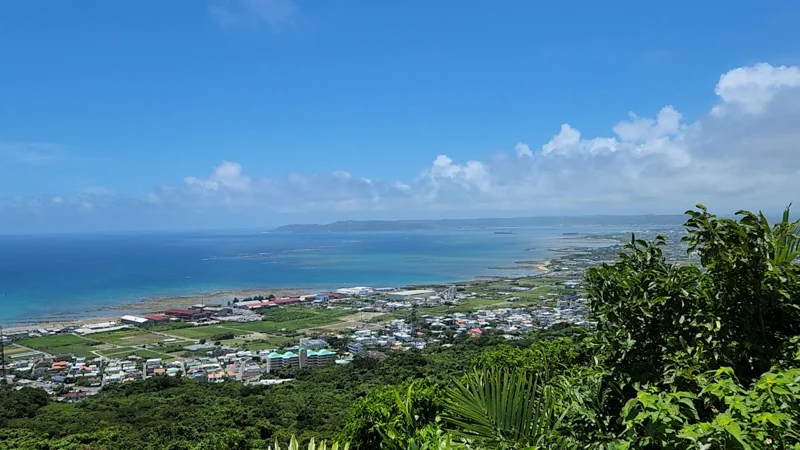
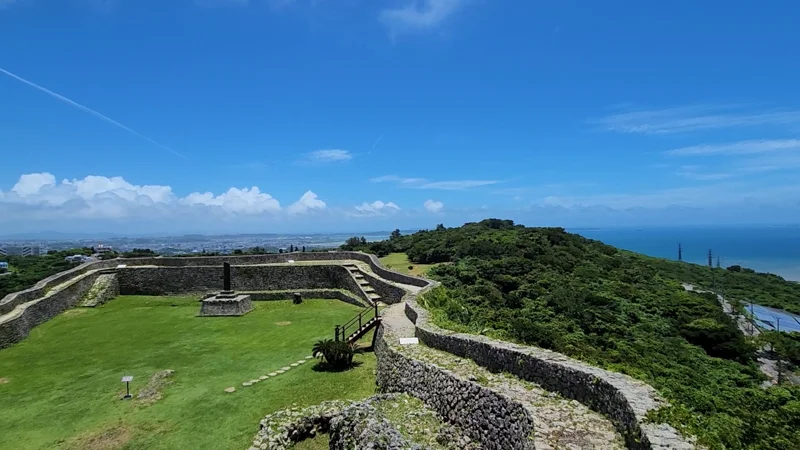
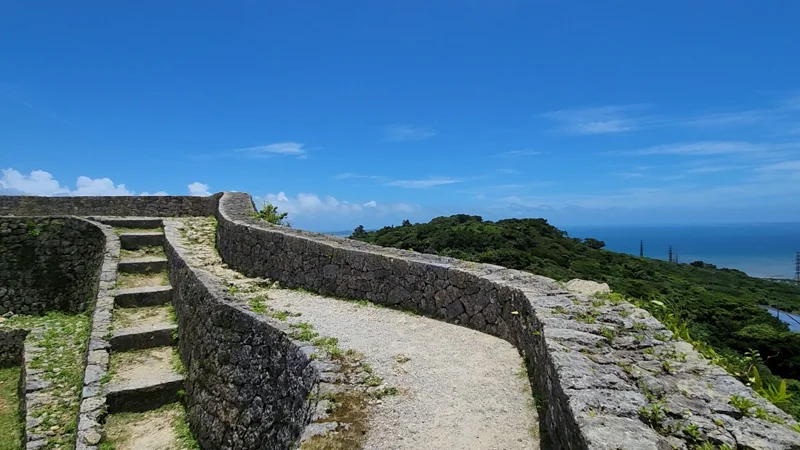
Nakagusuku-jō stands out for its succession of enclosures aligned from northeast to southwest: Minami-no-kaku (South), Nishi-no-kaku (West), Ichi-no-kaku (meaning: first enclosure), Ni-no-kaku (second enclosure), San-no-kaku (third enclosure), and Kita-no-kaku (North). This composition follows the terrain and opens crossed views of the east coast and the island’s interior. The flowing line of the walls, which follows the rocky ridges, remains one of Nakagusuku-jō’s signatures.
Three masonry techniques visible at a glance
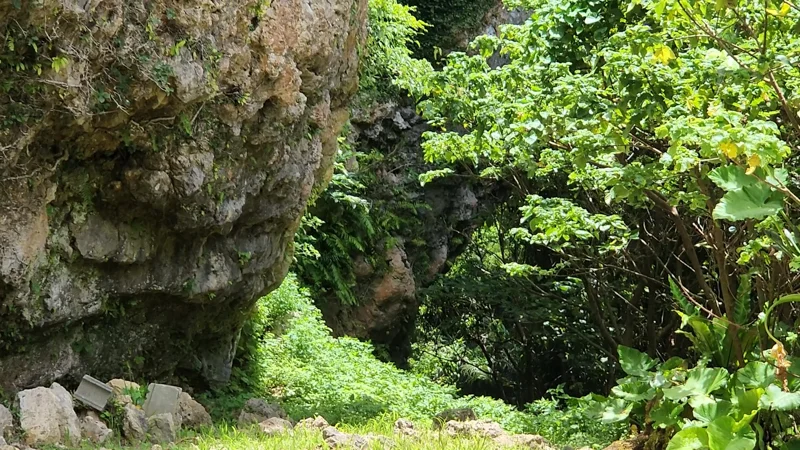
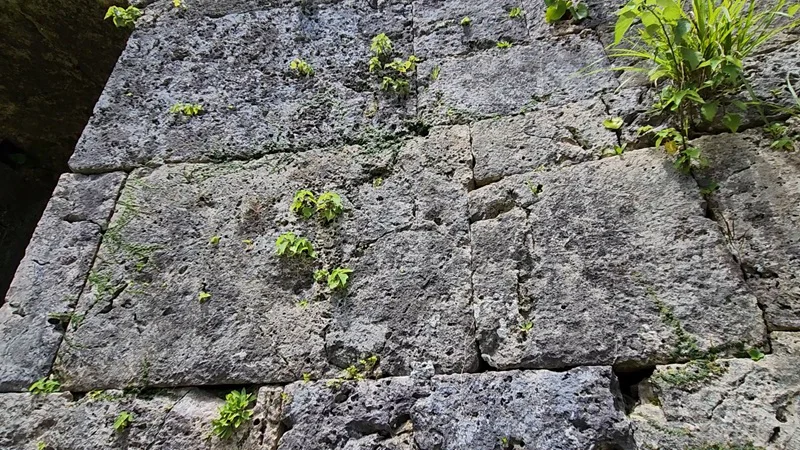
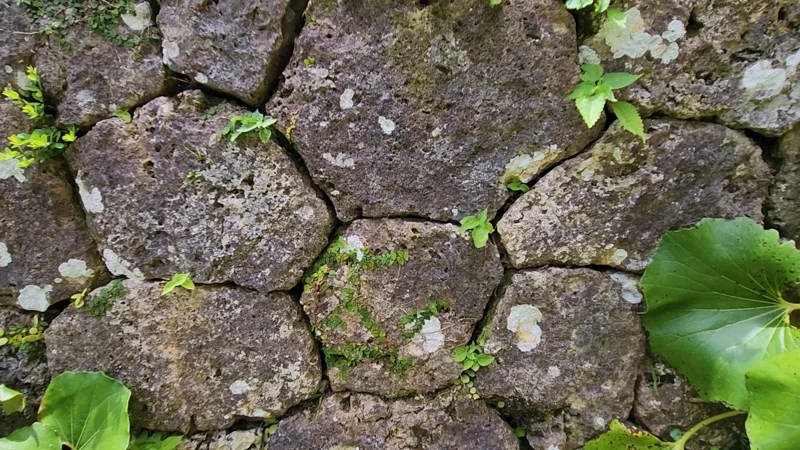
Few fortresses allow you to compare, on a single site, three different masonry styles:
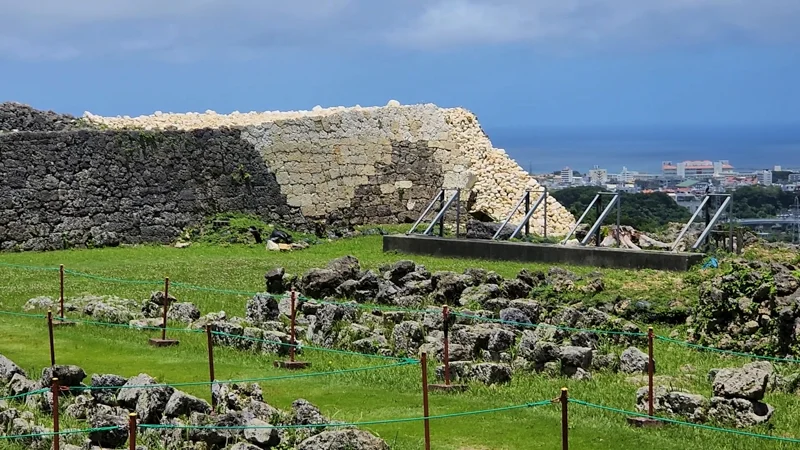
- Nozura-zumi: barely shaped rubble stones, visible especially in the South.
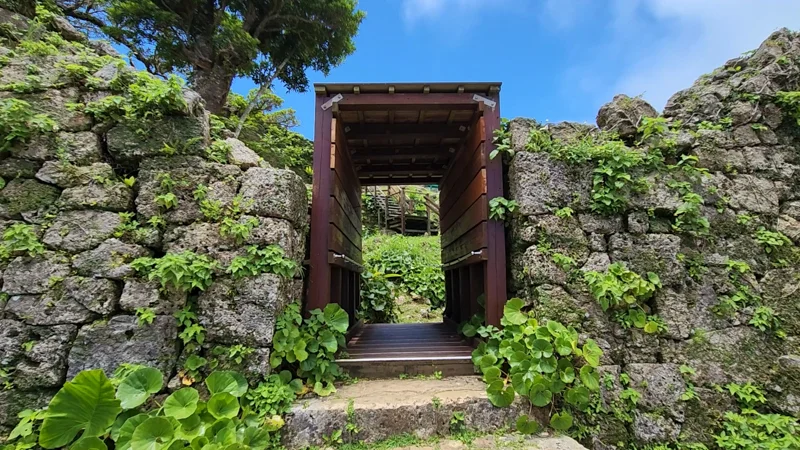
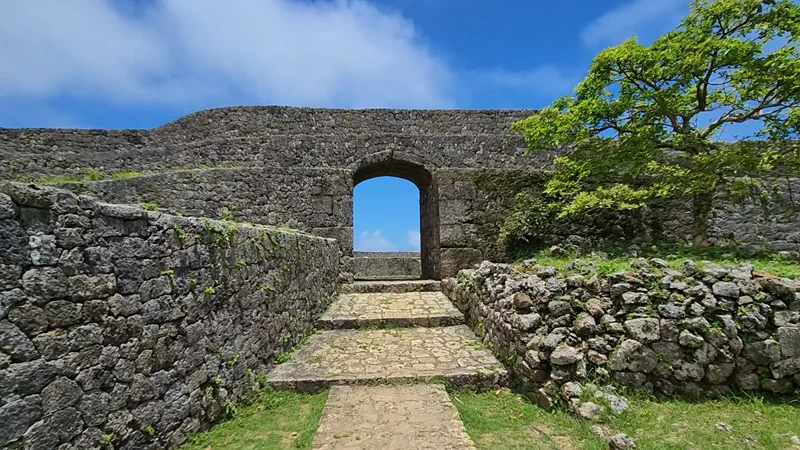
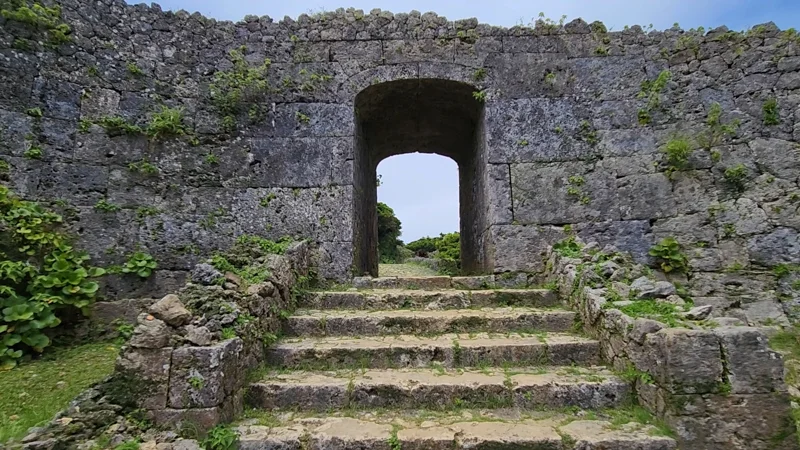
- Nuno-zumi (called “tofu-zumi”): regular rectangular blocks, very clear in enclosures 1 and 2, and around the gates.
- Aikata-zumi (“kikkō ran-zumi”): interlocking polygonal blocks, the most resistant technique, characteristic of the 3rd and North enclosures, attributed to major works of the 15th century.
Key stages, from the Middle Ages to the modern world
- 14th century: a lineage of local anjî begins the first stone castle.
- 1440: Gosamaru, lord and master builder, receives the royal order to settle in Nakagusuku and expands the site to oversee the east of the island.
- 1458: famous episode in the history of Okinawa: Gosamaru is attacked during the autumn moon festival. After his fall, the domain passes under the direct control of the royal government.
- Edo period: the site retains a local administrative function.
- 1853: a team from Commodore Perry makes surveys and sketches of the ruins.
- 20th century: restoration of the walls, national designation, then inscription to UNESCO in December 2000.

Click for a video tour
Nakagusuku Castle or Kitanakagusuku Castle?
The site is officially named Nakagusuku Castle (Nakagusuku-jō). However, it is located in the current administrative territory of Kitanakagusuku village. Therefore, one can also say: Kitanakagusuku Castle when referring to the place where it is located.
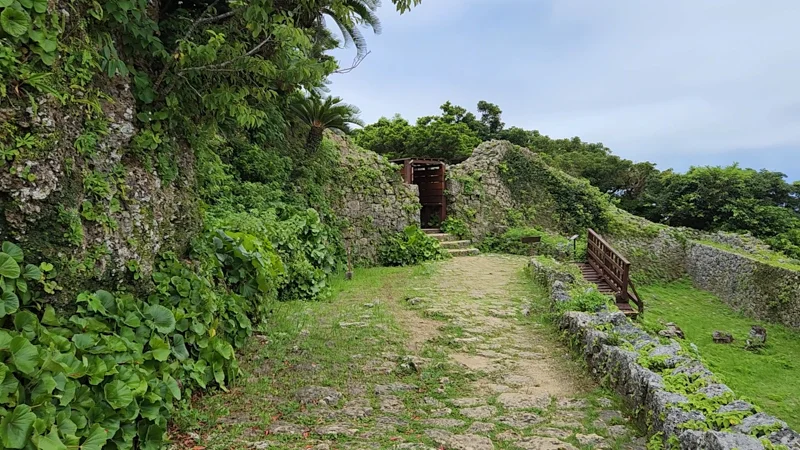
Details not to be missed on site
- The main gate and the alignment of the axes: from Ni-no-kaku, one can understand the precision of the plan by observing the alignment of the gateways.
- The “gun loopholes”: near the gate, small openings in the masonry can be observed. According to some hypotheses, they may have been used for handling firearms introduced from China during the Ming period. However, researchers remain divided, as these holes could also have had other technical functions. It is therefore an interesting interpretation, but one that must be considered with caution.
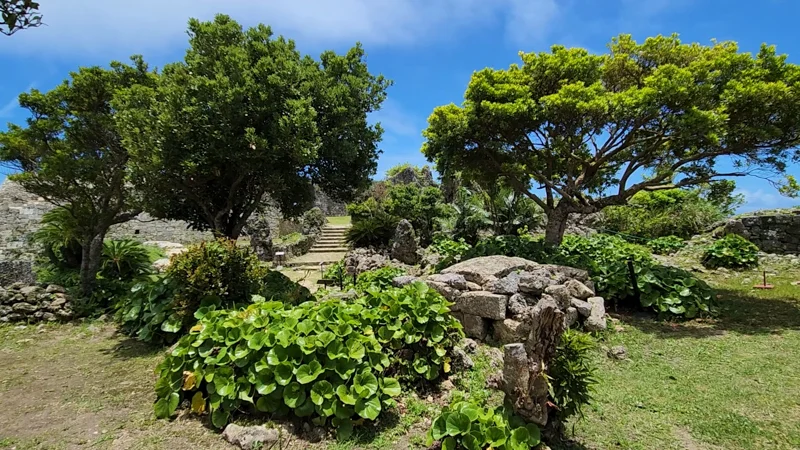
- The large wells: Ufugā in the northern enclosure and the double well Mītugā in the west testify to a water management system designed with the slope, favoring flow and the stability of the embankments.
- The marked stones: stones with mason’s marks discovered in 2021 revive hypotheses about the organization of stonemason teams and key structural points.
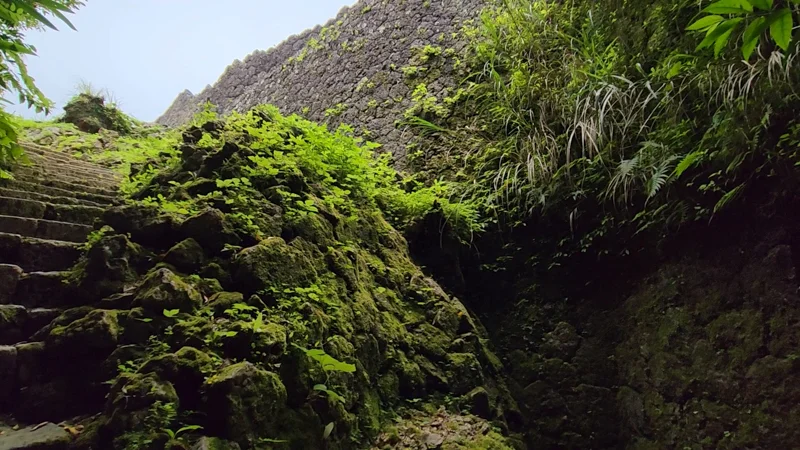
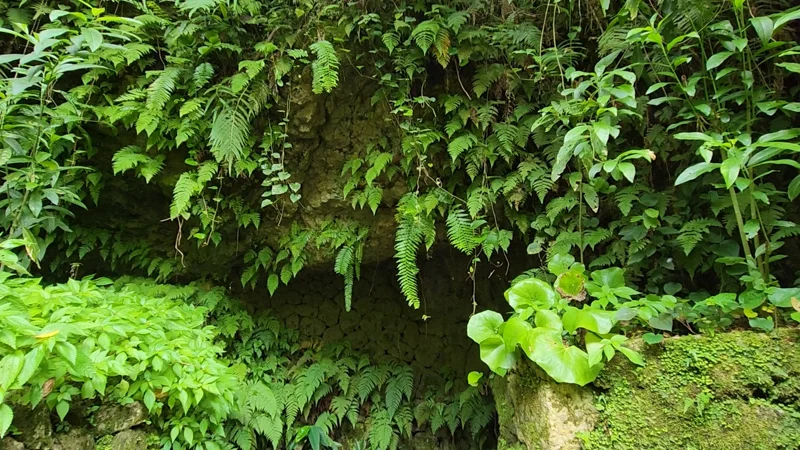
The aesthetics of Okinawan walls
The beauty of Nakagusuku-jō lies in a coral limestone that is soft for cutting but solid in masonry, as well as in undulating lines that absorb the sea wind while following the relief.
The result: powerful, sober ramparts, and a striking contrast between the color of the rock and the green of the slopes. This aesthetic, mentioned in the UNESCO file, is part of the criteria that earned the collective inscription of the Gusuku.
Practical visiting tips
- Hours: reception from 8:30 a.m. to 5:00 p.m. all year, until 6:00 p.m. from May to September. Occasional closures possible in case of bad weather or safety works.
- Indicative fees: adult 500 ¥, junior high and high school student 300 ¥, elementary school student 200 ¥; free for preschool children accompanied and for holders of disability cards.
- Access and parking: free parking, including for buses.
- Accessibility: toilets accessible to people with reduced mobility, but note that the path is not practicable in a wheelchair or with a stroller.
- Volunteer guides: free tours offered by the local association “Gusuku no Kai”.
Events and night openings
Since 2025, the site has been testing immersive night tours combining sound and light, organized on certain dates with dedicated ticketing. Check the official page of Nakagusuku-jō, as “night walks” and “observation evenings” are scheduled according to the season.
Placing Nakagusuku among the Gusuku of Okinawa
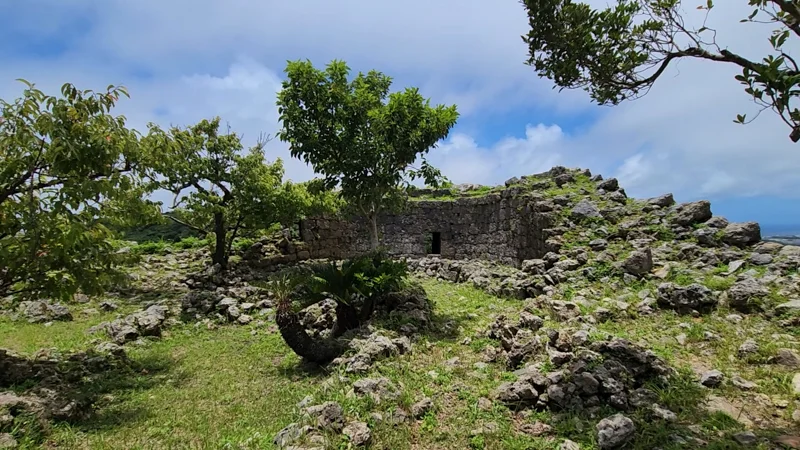
The ruins of Kitanakagusuku are in dialogue with other major sites: Nakijin, Zakimi, Katsuren and Shuri, as well as places linked to the monarchy such as Sonohyan-utaki Ishimon, Tamaudun and Shikina-en. Together, these sites illustrate the emergence of a central power and a royal culture at the turn of the 14th–16th centuries.
In short
- A masterpiece of masonry where three construction techniques coexist.
- A direct witness to the construction of the Ryūkyū Kingdom and the rivalries of the 15th century.
- A site easy to understand, even for novice visitors, with an educational route; succession of enclosures, alignment of gates, large wells, and explanatory panels.
- A comfortable visit thanks to volunteer guides and electric shuttles, with superb viewpoints perfect for photos.
Sources and official sites (non-affiliated):
Bunka is a great site that focuses on culture and historical heritage.
Nakagusuku-jō (official site)
Kitapo Tourism Office of Kitanakagusuku
A video available on my channel
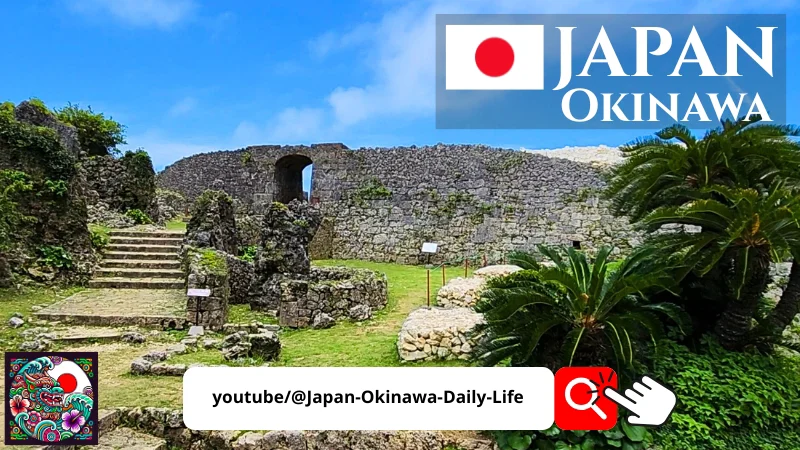
To extend the discovery, a video filmed directly at the ruins of Nakagusuku is online on my YouTube channel Japan Okinawa Daily Life. It shows the stone walls, the successive enclosures, and the superb panoramas over the bay.
Click to watch the video on YouTube
Texts, images, and videos © Japan Okinawa Daily Life
Copying, downloading, and reuse prohibited without permission