The Chief’s House: a key role in village administration
The Jitūdē, sometimes translated as “lord of the manor” or “local chief,” was the municipal authority of a village in Okinawa between the 17th and 19th centuries. His role went far beyond that of a simple representative. He managed the distribution of agricultural land, supervised the protection of forests and rice fields, collected taxes, and ensured the administrative order of the community. Inherited from the era of the Ryūkyū Kingdom, this position placed the Jitūdē at the heart of the social and political life of each village. His house, larger and more structured than those of ordinary residents, symbolized both his status and his responsibilities.
A typically Okinawan architecture
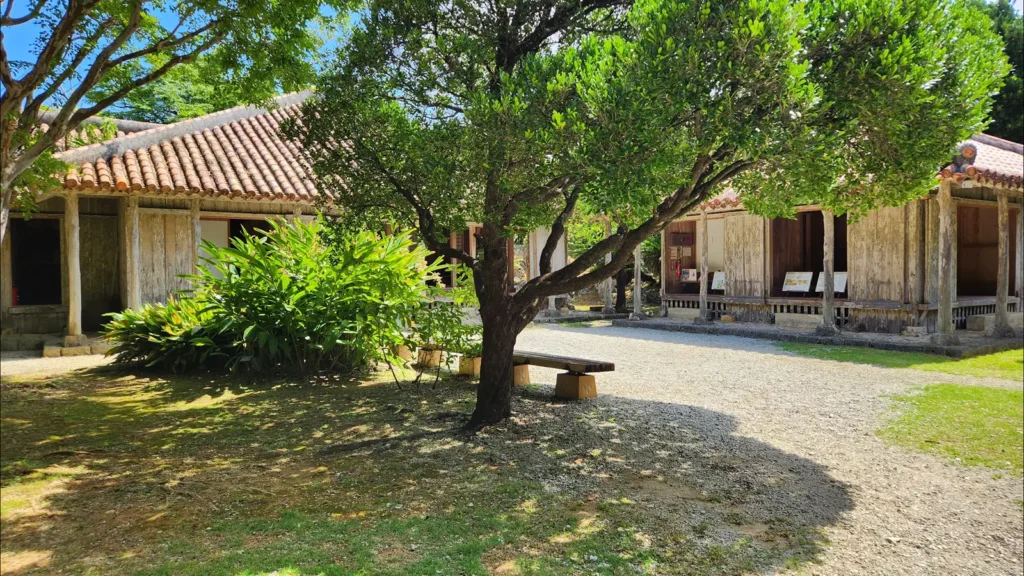
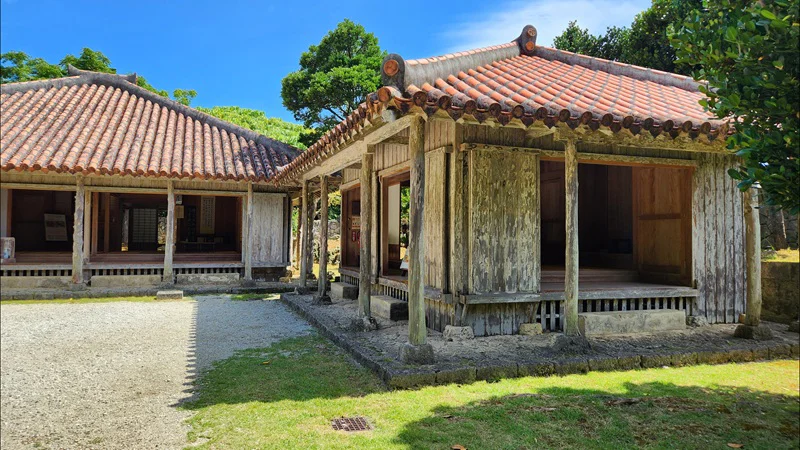
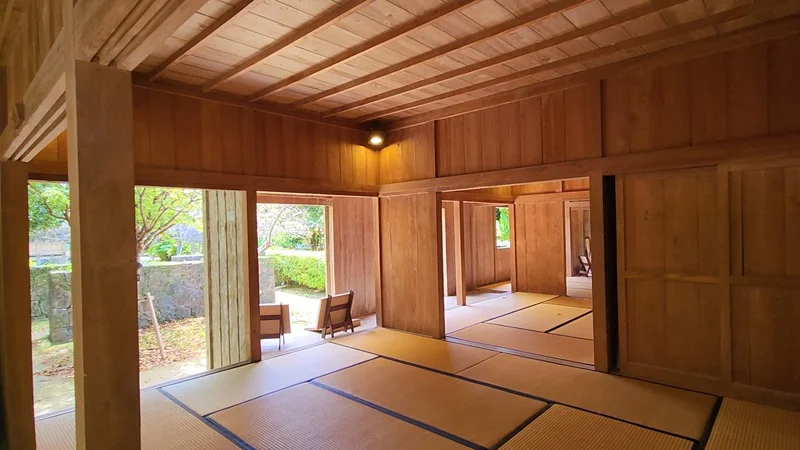
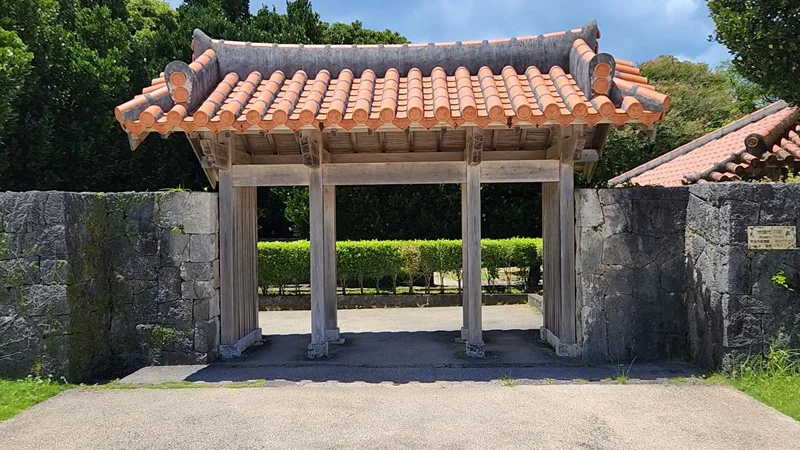
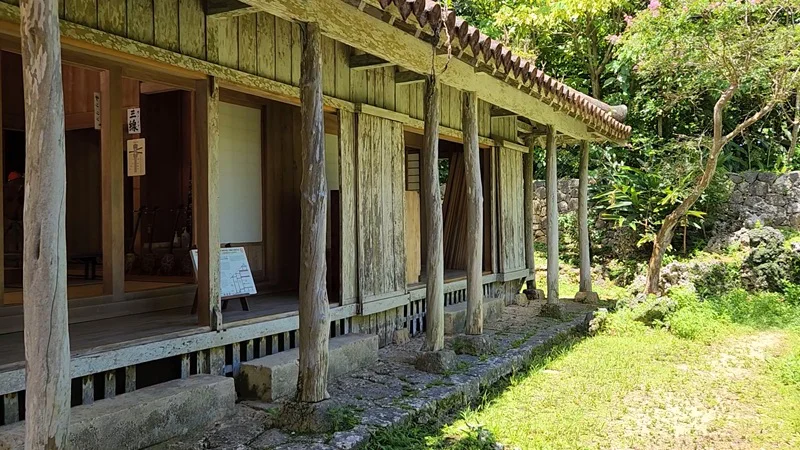
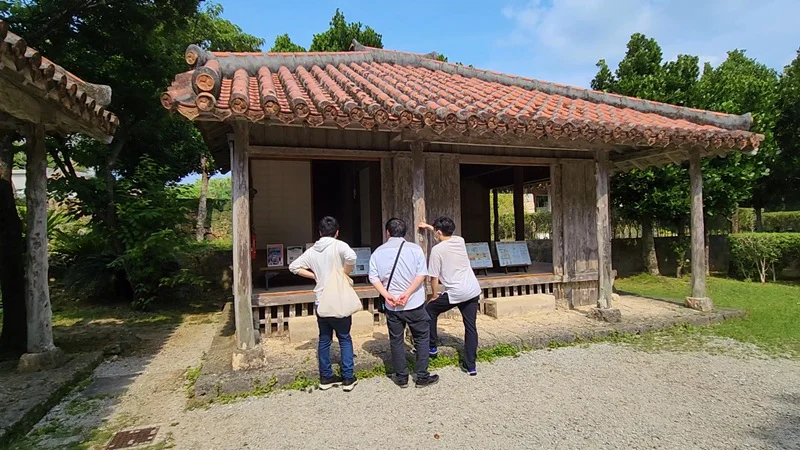
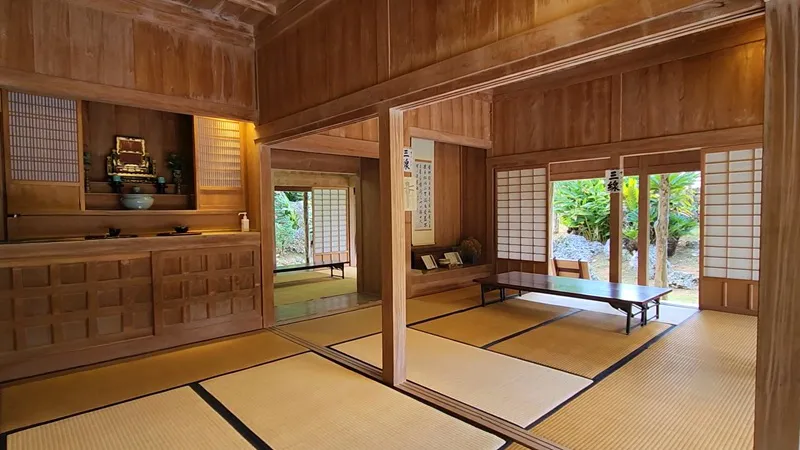
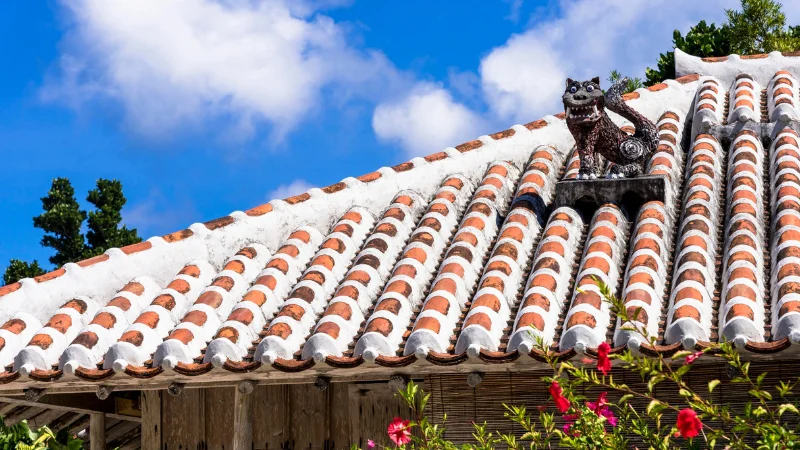
The house of a Jitūdē, now reconstructed at the Native Okinawa Village, illustrates the traditional style of residences belonging to local notables. Oriented toward the southeast, it consists of several rooms aligned according to a precise layout. Inside were the reception room called Ichiban-za, the Buddhist room Niban-za, and a residential area known as Sanban-za. At the back were rooms for women and a maternity room equipped with a hearth. The entire property was surrounded by stone walls and accessible through a large gate called Yajō, decorated with red tiles typical of the Okinawan landscape.
A social and spiritual space
This residence was not only a place to live. It also served as an administrative center and sometimes hosted visiting guests. Next to the main house was often an annex called Ashagi or “front house.” It was used for community rituals, collective meetings, or as a reception space. The interior organization reflected both the family hierarchy and the importance placed on religious rites and hospitality in Ryūkyū society.
Agrarian and administrative organization
The village, called Magiri, was an administrative unit comprising several hamlets. The Jitūdē worked with assistants and subordinate officials to manage daily life. Some were responsible for the distribution of land (Jituchi), others for forest supervision (Norokumoi). There were also officials who redistributed fields to peasants, called Hyakushou, as well as managers of private plots, known as Shiakechi. This collective organization ensured the sustainable use of resources and strengthened the authority of the central power over the entire island.
The typical Okinawan house
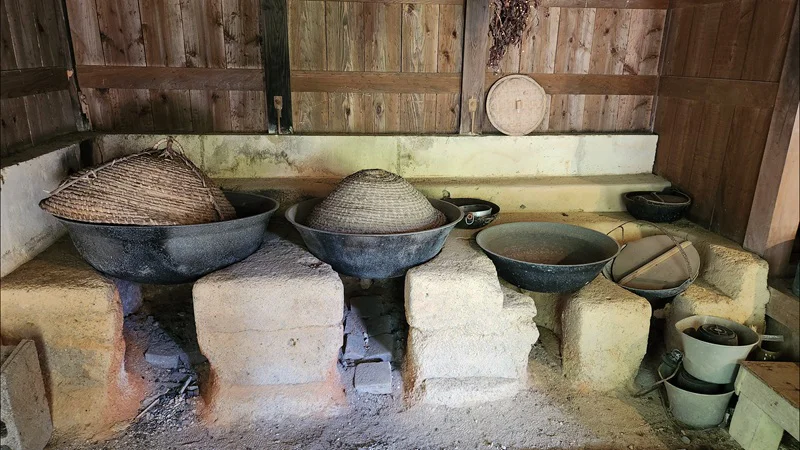
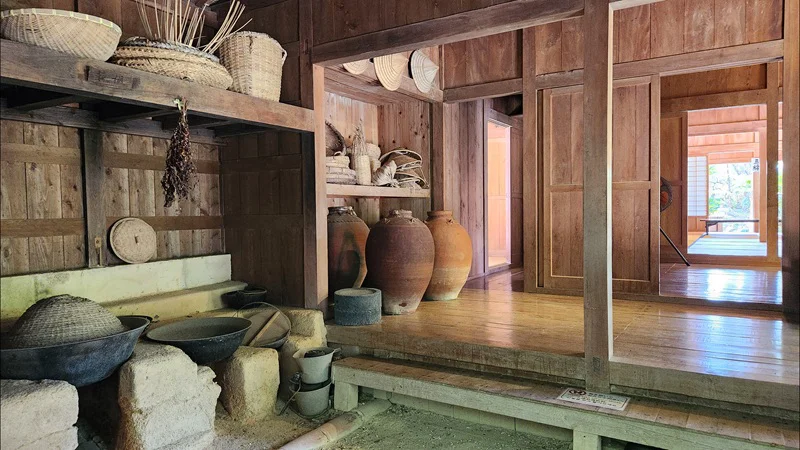
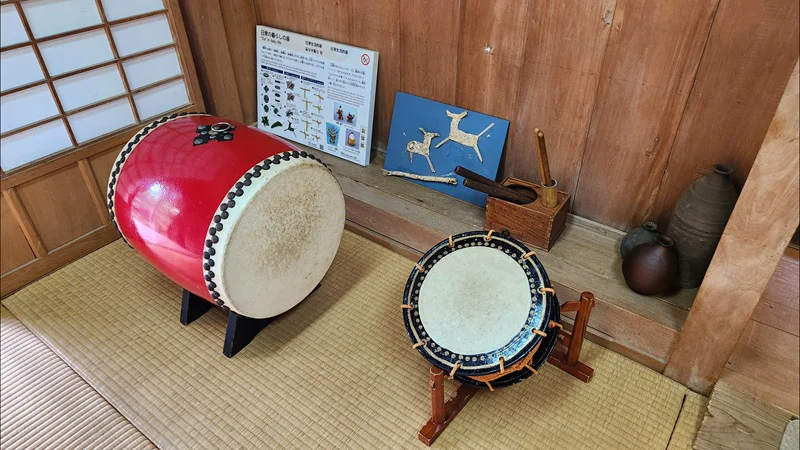
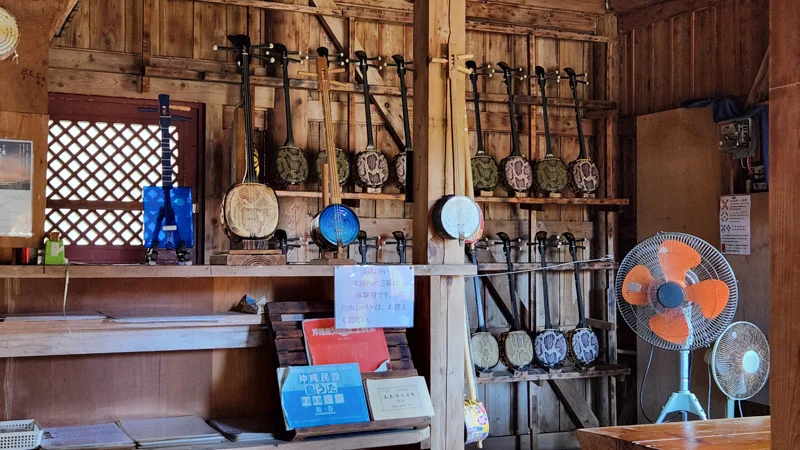
In addition to their administrative function, these residences also reflect the local way of life. They often included a Doma, an earthen-floored kitchen with a space to store firewood. Some rooms were used for sorting crops, while others were multipurpose, hosting both family gatherings and visitors. Inside, one could find calligraphy scrolls, low tables, the sanshin, a three-stringed musical instrument, as well as hanging baskets used to preserve food.
Gardens and the art of living
Access to the house was through the monumental gate, followed by a privacy wall called Hinpun, designed to protect the residents’ privacy. The gardens varied according to social status. For most families, they remained simple and functional. Among the notables, they took on an aesthetic dimension, adorned with sago palms, rock arrangements, dry ponds, and carved stones reminiscent of Chinese landscape paintings. Within the enclosure, there were also annex buildings such as pigsties or goat sheds, essential to daily life.
Traditional houses of Okinawa: the Nuchijiya style
Two forms of housing
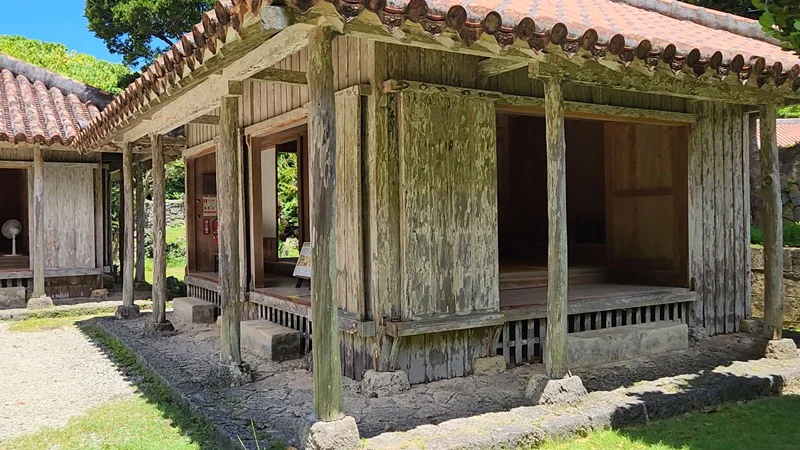
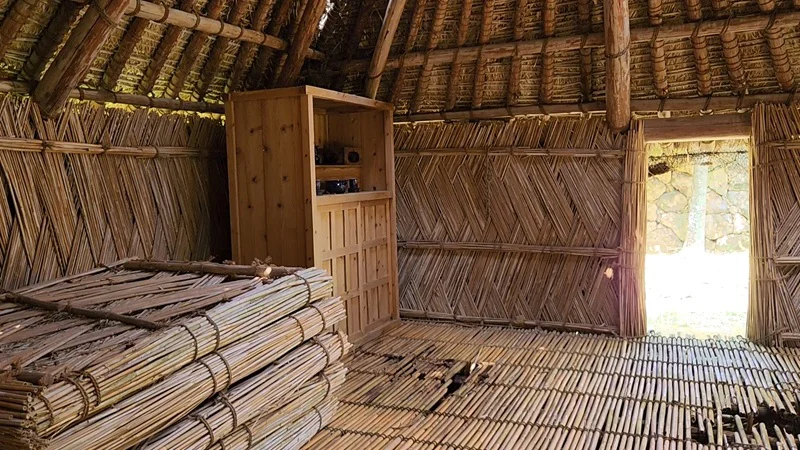
In Okinawan vernacular architecture, two main types of dwellings were distinguished: the Anaya, semi-underground and rudimentary huts, and the Nuchijiya, true wooden houses covered with tiles, inhabited by wealthy families or village notables. The Jitūdē’s house presented at the Native Okinawa Village is an emblematic example of this Nuchijiya style.
An ingenious framework
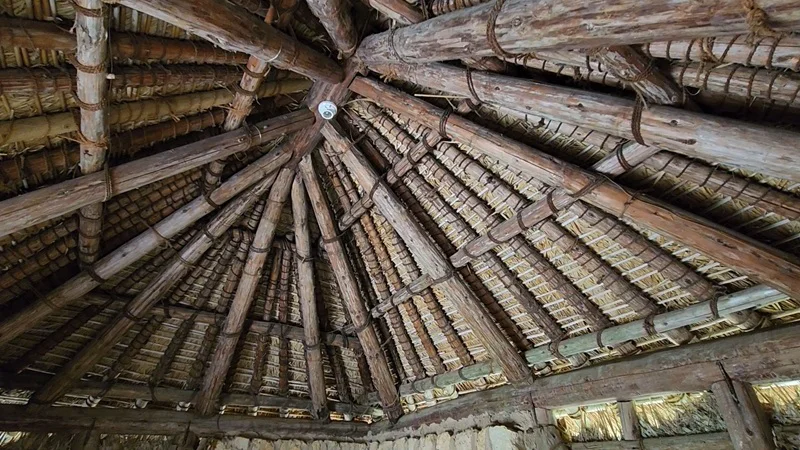
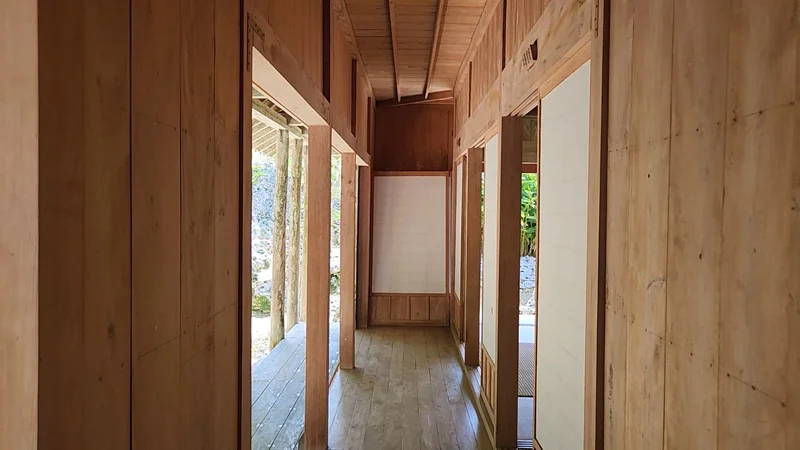
The structure rested on several essential elements. A pillar anchored on a foundation stone supported the whole, reinforced by a horizontal beam called Ashigatame. Crossbeams known as Nuki passed through and stabilized the posts. At the top, a beam called Keta ensured the cohesion of the entire framework. All these components were held together using traditional wooden joinery techniques with tenons and mortises, sometimes reinforced with wooden pegs, without the use of metal nails.
An adaptation to the subtropical climate
The Nuchijiya houses were designed to withstand Okinawa’s subtropical climate. Wide eaves supported by pillars called Amahaji protected against heavy rains and the strong winds of typhoons. The raised floor prevented moisture from damaging the beams and promoted air circulation, making the interior more comfortable during the hot and humid summers.
A strong architectural identity
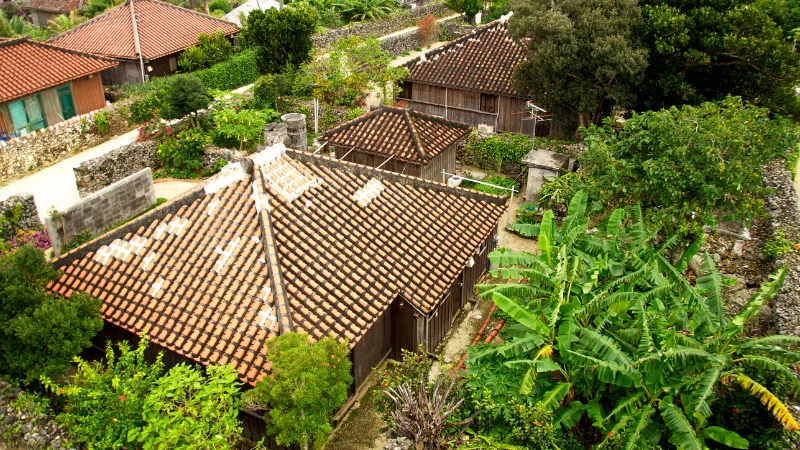
The combination of red-tiled roofs, massive pillars, and wooden walls gave Okinawan villages a distinctive silhouette. Every detail served a practical purpose while reflecting a simple and harmonious aesthetic inherited from the Ryūkyū Kingdom. These houses, still visible in some villages and preserved or reconstructed at the Native Okinawa Village, stand as a testament to ancestral craftsmanship that combines strength and elegance.
A must-see visit at the Native Okinawa Village
Exploring the house of the Jitūdē at the Native Okinawa Village is far more than admiring an architectural reconstruction. It means understanding the political and social organization of the former Ryūkyū Kingdom, discovering the lifestyle of rural notables, and feeling the harmony between traditions, nature, and spirituality. Located in the heart of the Ocean Expo Park, this site allows visitors to travel back in time and imagine the daily life of Okinawan villagers centuries ago. It is an ideal stop to complement the visit to the Churaumi Aquarium, the tropical gardens, and the park’s other cultural treasures.
A video to continue the discovery
A video filmed at the Native Okinawa Village is available on my YouTube channel Japan Okinawa Daily Life. It showcases the house of the Jitūdē, its traditional architecture, and its role in the organization of Okinawan villages. A perfect visual walk to complement the reading and feel the unique atmosphere of this place.

Click to visit “Native Okinawa Village” in video
Also to read and watch: Ocean Expo Park
To better understand the entire site where the Native Okinawa Village is located, a detailed article about the Ocean Expo Park is available on this blog. It presents the different areas of the park, its main attractions, and many practical tips. A dedicated video also accompanies the article on Ocean Expo Park, offering a lively overview of this cultural and natural landmark of Okinawa.
Do you love Japanese architecture?
If you appreciate traditional Japanese architecture with its curved roofs and red-lacquered walls, I invite you to discover my article dedicated to the charming reconstructed village of Murasaki Mura. In addition to the visit, you can take part in various craft and cultural workshops, as well as attend the night festivals regularly held on site.
Texts, images and videos © Japan Okinawa Daily Life
Copying, downloading and reuse prohibited without permission