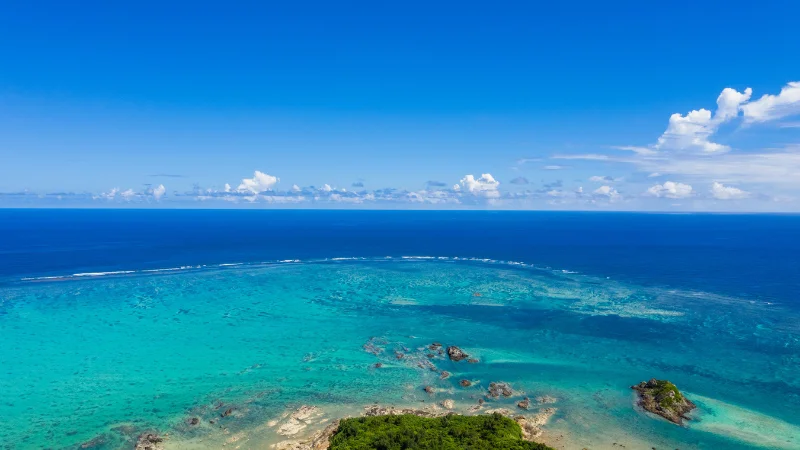
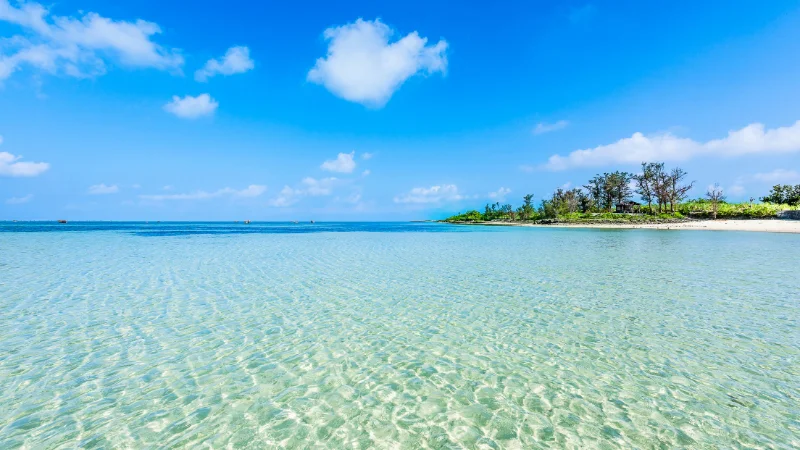
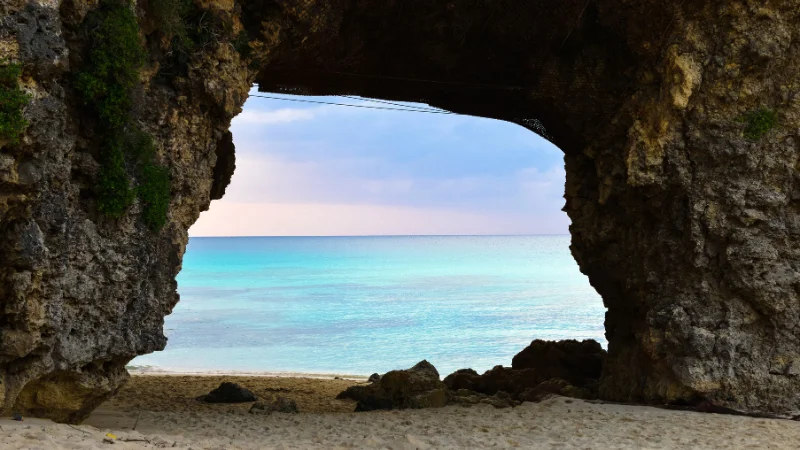
When we hear the name “Okinawa,” many imagine a small Japanese island lined with paradise beaches and bathed in turquoise waters. Yet, behind this postcard image lies a much richer and deeper history: that of the Ryukyu Kingdom.
The Ryukyu Kingdom in Okinawa’s Daily Life
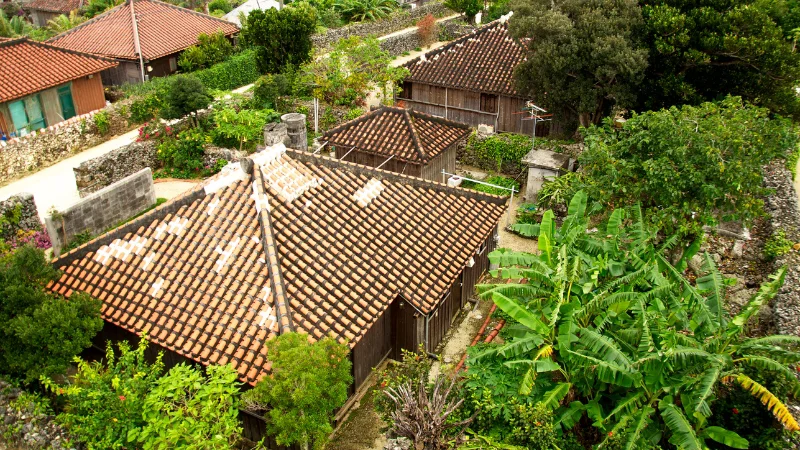
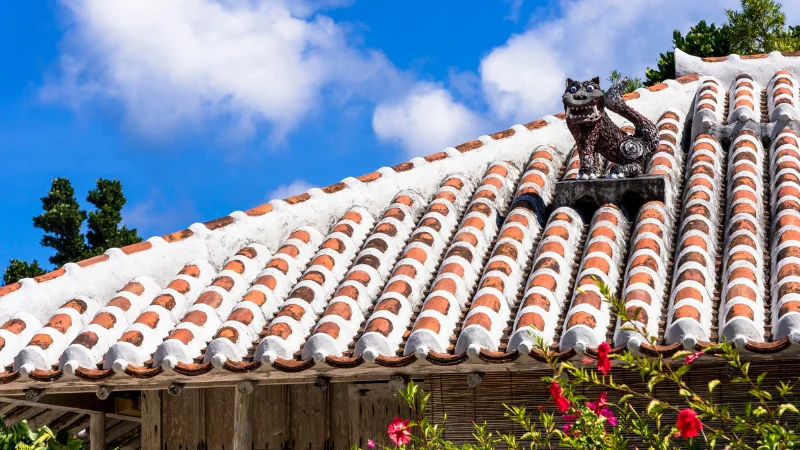
If you travel to Okinawa, you will quickly notice that the word Ryukyu is everywhere. It appears in the names of companies, banks, residences, shops, brands, and even everyday products. You will also see, in front of many houses or buildings, protective lion-shaped statues: these are the Shisa (シーサー), traditional guardians inherited from the kingdom.
All of this does not directly refer to modern Japan, but to an older identity: that of the Ryukyu Kingdom, which existed until its annexation by the Empire of Japan in 1879 (the Ryūkyū shobun).
After World War II, Okinawa came under American administration in 1945.
It was not until 1972 that the archipelago was returned to Japan.
If you think about it, this means that it has only been about 150 years since the Ryukyu Kingdom became “Japanese,” and barely half a century since Okinawa returned to Japan after the American occupation.
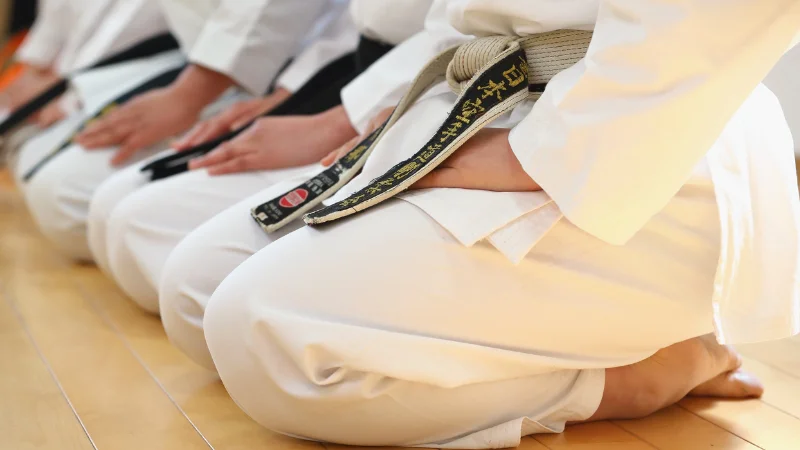
Far from having disappeared, some traditions continue to live on and are still sometimes passed down from generation to generation. Others are preserved by associations and cultural centers, guardians of collective memory and respect for the ancestors of the island kingdom.
For many centuries, Ryukyu was an independent state. It therefore forged a unique heritage, with regional languages and customs that still permeate the daily lives of Okinawa’s inhabitants.
This article thus launches a series dedicated to this island kingdom. Step by step, I will help you discover some cultural chapters that still shed light on Okinawa’s identity today.
Context:
The Four Main Islands of Japan
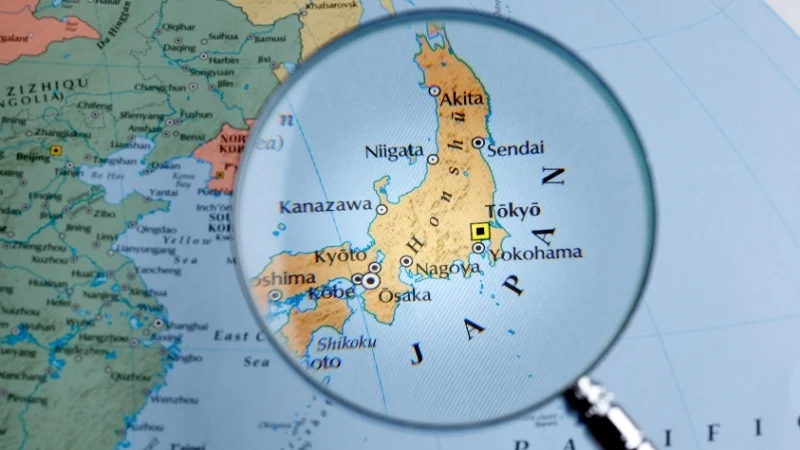
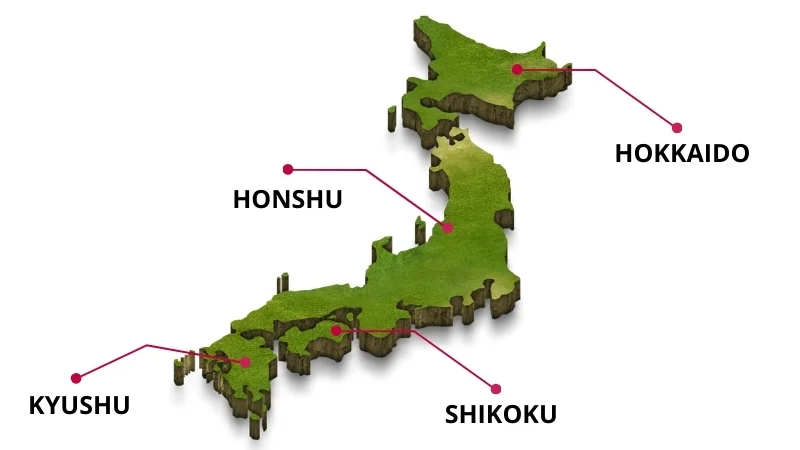
Japan is a vast archipelago made up of thousands of islands, but four of them stand out for their size and importance.
The largest and most famous is Honshū. The true heart of the country, it is home to the great cities everyone knows: Tokyo, the modern and bustling capital; Kyoto, the former imperial capital; as well as Kobe, Osaka, and Hiroshima, a city marked by history.
To the north of Honshū lies Hokkaidō, a wild land with harsh winters, renowned for its vast natural expanses and pristine snowy landscapes.
To the south of Honshū is a more discreet island, yet rich in traditions: Shikoku.
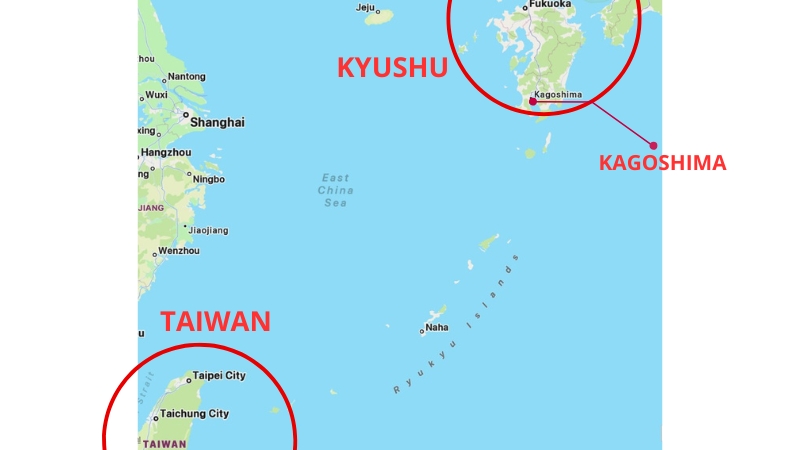
Even further south stretches Kyushu, a true crossroads between Japan and Asia. The island is home to the majestic Sakurajima volcano and hosts both dynamic metropolises like Fukuoka, as well as cities with older, history-laden pasts, such as Nagasaki.
And it is precisely Kyushu that interests us. For from this island, and more precisely from the city of Kagoshima, would emerge an event that would forever change the destiny of an island kingdom now almost forgotten: the Ryukyu Kingdom.
Thus begins our journey through time, to encounter a unique civilization, with its own languages, rites, and music, which thrived for centuries before falling under the influence of Japan.
Location of the Ryukyu Kingdom
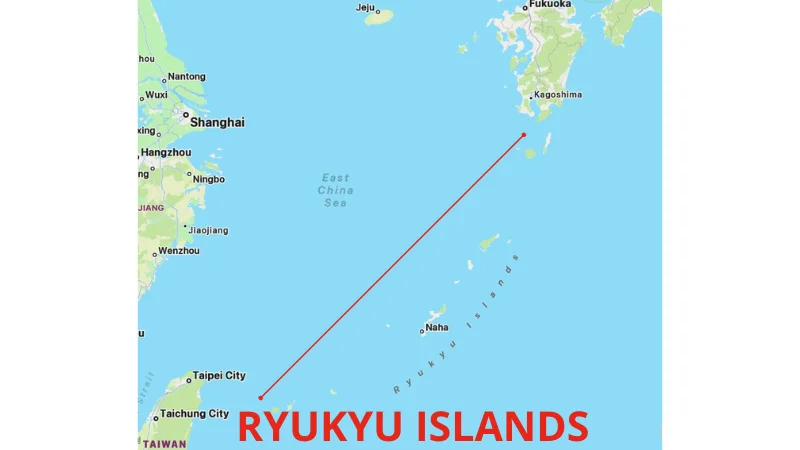
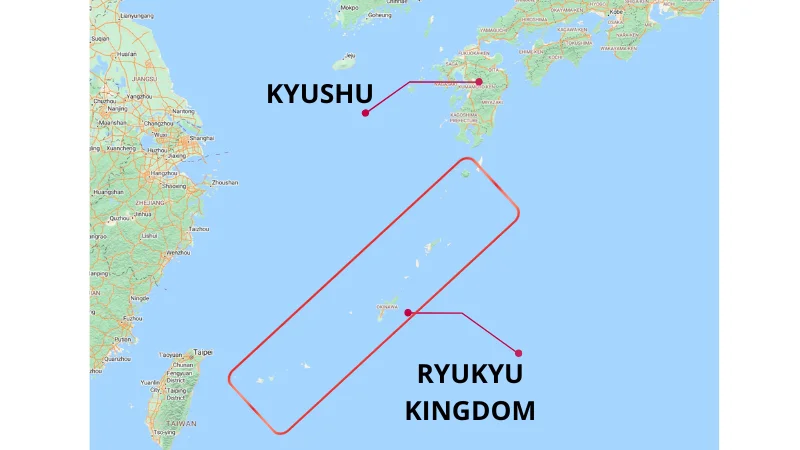
Imagine a necklace of islands stretching between the south of Japan (Kyushu) and the coasts of Taiwan. This island arc is what we call today the Nansei Islands.
At the northern end, near Kyushu, lie the Amami Islands, green and close to mainland Japan. At the other end, only a few hundred kilometers from Taiwan, stand the Yaeyama Islands (in Japanese), known for their tropical beaches, coral reefs, and lush forests.
Between these two poles lies Okinawa, the largest and most famous of the islands, the true heart of this ensemble once called the Ryukyu Kingdom.
At the end of the Middle Ages, these islands were divided into three small kingdoms, a period known as Sanzan. In 1429, an ambitious leader named Shō Hashi succeeded in unifying these lands. He then founded a state and established his capital in Shuri, in what corresponds today to the city of Naha, the modern capital of Okinawa.
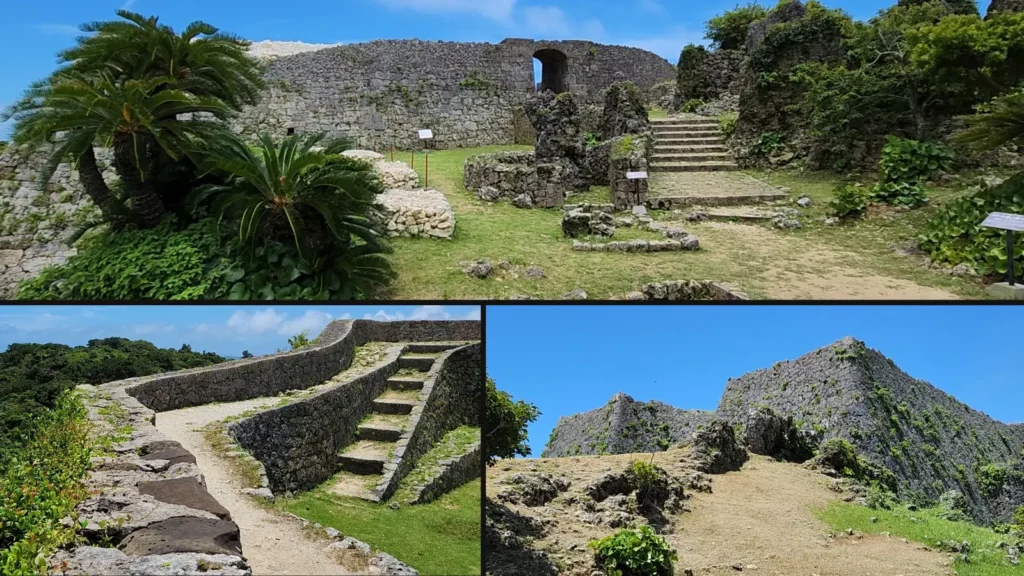
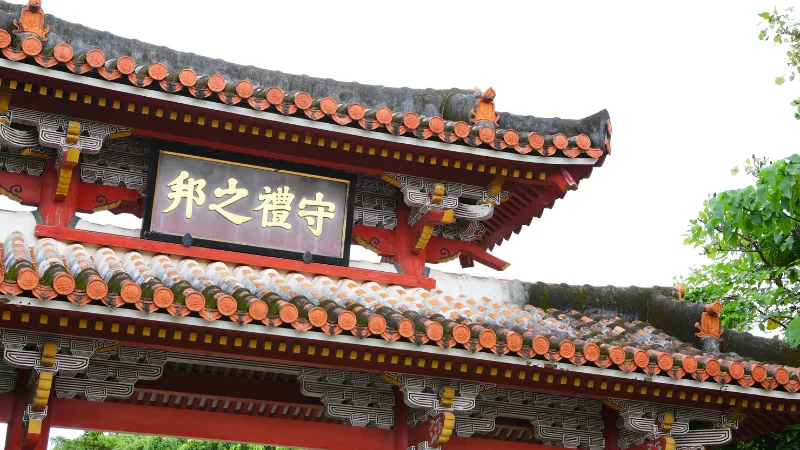
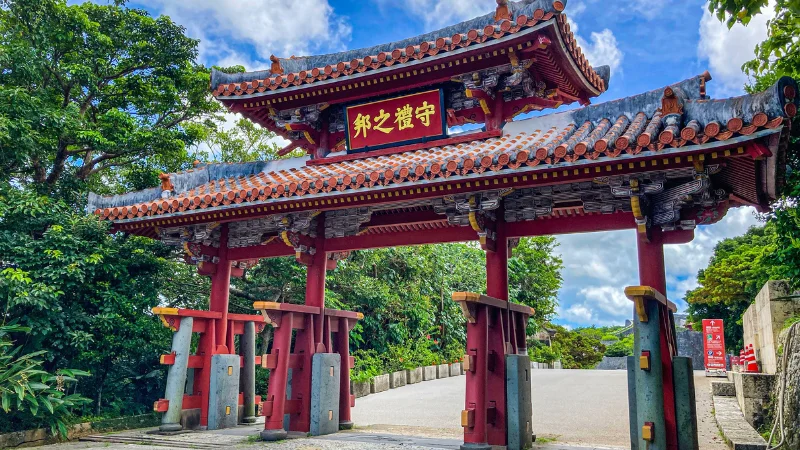
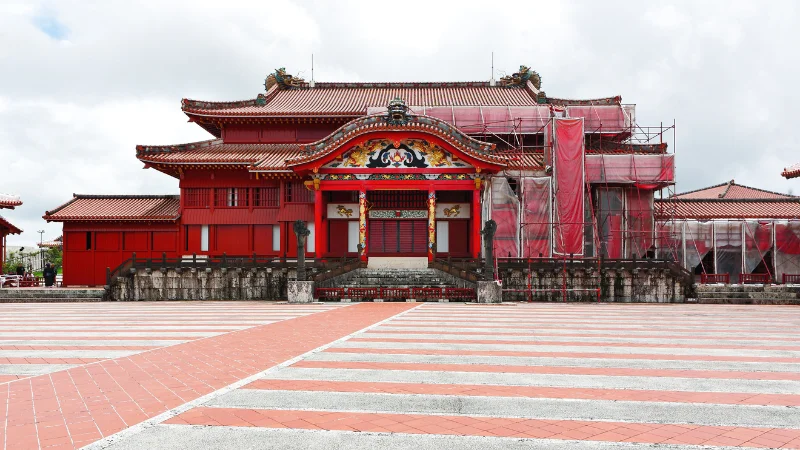
Shuri Castle (Shuri-jō) was not just a fortress, it represented the beating heart of the kingdom. It was a place where imperial envoys from China were welcomed, where music and dance were celebrated, where refined poems were composed, all while governing this ocean-oriented island kingdom.
The Shadow of Satsuma
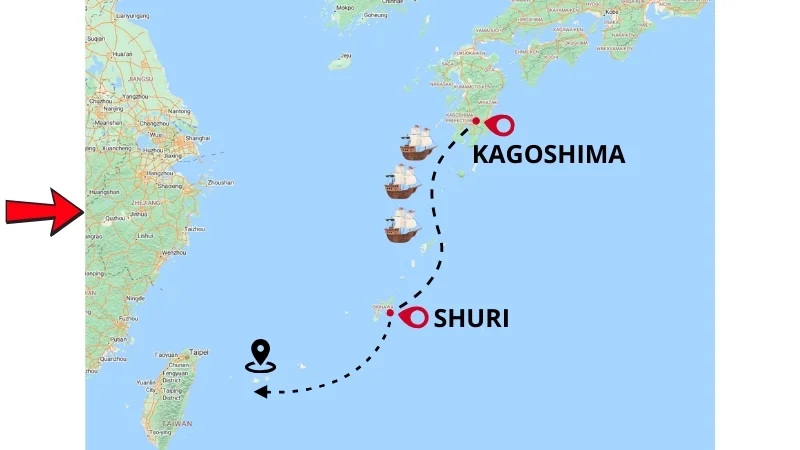
At the beginning of the 17th century, the fate of the Ryukyu Kingdom shifted. In 1609, the troops of the powerful Shimazu clan, rulers of the Satsuma domain (whose capital was in Kagoshima, on the southern island of Kyushu), crossed the sea and invaded the archipelago.
The kingdom was not abolished: its throne, its rituals, and its ties with China remained in appearance. But behind the scenes, everything changed. Ryukyu now had to pay a heavy tribute to Satsuma while continuing to send missions to the Chinese imperial court.
This complex situation shaped the history of the archipelago throughout the Edo period (1603–1868): a kingdom that presented itself to the world as independent, but which, in reality, lived under the tutelage and fiscal control of southern Japan. A dual identity, at once a diplomatic façade and a very real dependency, that left a profound mark on the culture and memory of the Ryukyus.
For more than four centuries, from 1429 until 1879, Shuri Castle (Shuri-jō) remained the seat of the Ryukyu monarchy.
The End of the Kingdom and the Reversion of Okinawa
In the 19th century, as Japan transformed into a modern centralized state, the Ryukyu Kingdom permanently lost its autonomy. In 1879, an envoy from the imperial government arrived in Shuri, the seat of power for centuries. King Shō Tai, who ruled Ryukyu at the time, was forced to abandon his throne; the kingdom was officially abolished. In its place, Tokyo established a new administrative entity: Okinawa Prefecture. This significant episode, experienced as a brutal rupture by the island’s inhabitants, went down in history as the Ryūkyū shobun.
A few decades later, another trial struck Okinawa: World War II. The island became one of the bloodiest battlefields of the Pacific conflict. At the end of the war, the archipelago came under American administration. For 27 years, from 1945 to 1972, Okinawa lived under the rhythm of military bases and foreign authority.
It was only on May 15, 1972, that Okinawa was officially reverted to Japan. This date, seen by some as a homecoming and by others as a complex transition, is still commemorated every year under the name Reversion Day (Fukki no Hi) in the prefecture.
Thus, in the span of less than a century, Okinawa experienced three decisive turning points: the end of the kingdom through annexation by Japan, American occupation, and reversion to Japan. Three moments that explain why, even today, the Ryukyuan identity remains alive, between memory, resistance, and adaptation.
[Shuri Castle, with its torii and its façade currently under renovation]
The Fundamentals of the Ryukyu Kingdom
In this series of articles, I do not claim to cover the politics of the kingdom in detail. That is a complex field, requiring specialized knowledge that I do not possess. My goal is different: I wish to share with you what, on my level, moves and interests me in the heritage of the Ryukyu Kingdom.
Through my readings, walks, and discoveries on site, I have identified seven major themes that seem essential to me for understanding the soul of this vanished kingdom:
- The regional languages, with certain words and expressions that still resonate today in everyday speech.
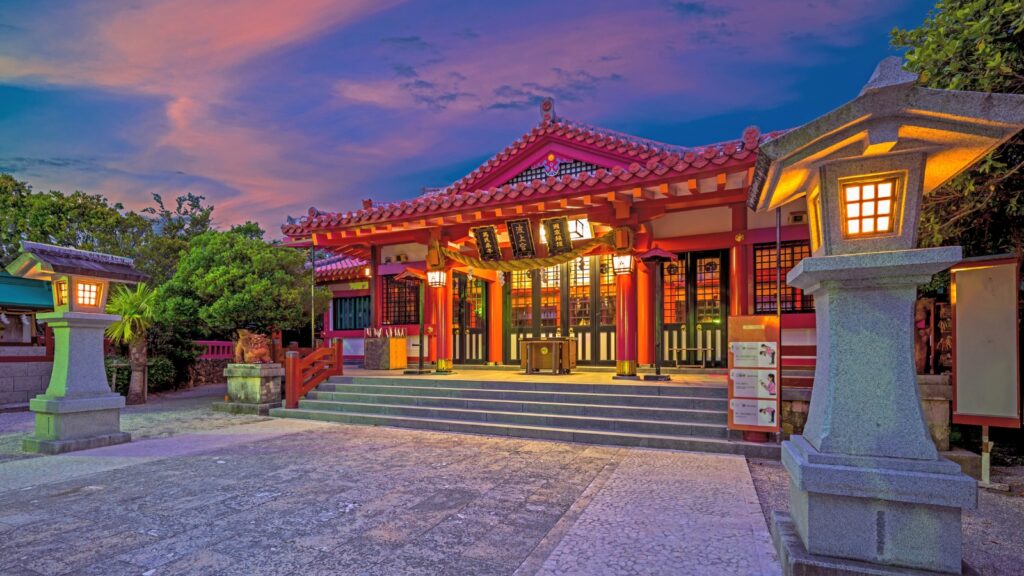
- The beliefs and sacred places, a spiritual heritage passed down from generation to generation, with artifacts that can still be discovered today.
- The performing arts, made up of dances, plays, and stories that once enlivened the court and the villages, and which are still presented today.
- The music, a profound reflection of Ryukyuan identity, carried by emblematic instruments such as the sanshin, which you will undoubtedly hear during your trip to the island.
- The clothing and textiles, symbols of refinement unique to the archipelago, which continue to inspire contemporary Okinawan fashion.
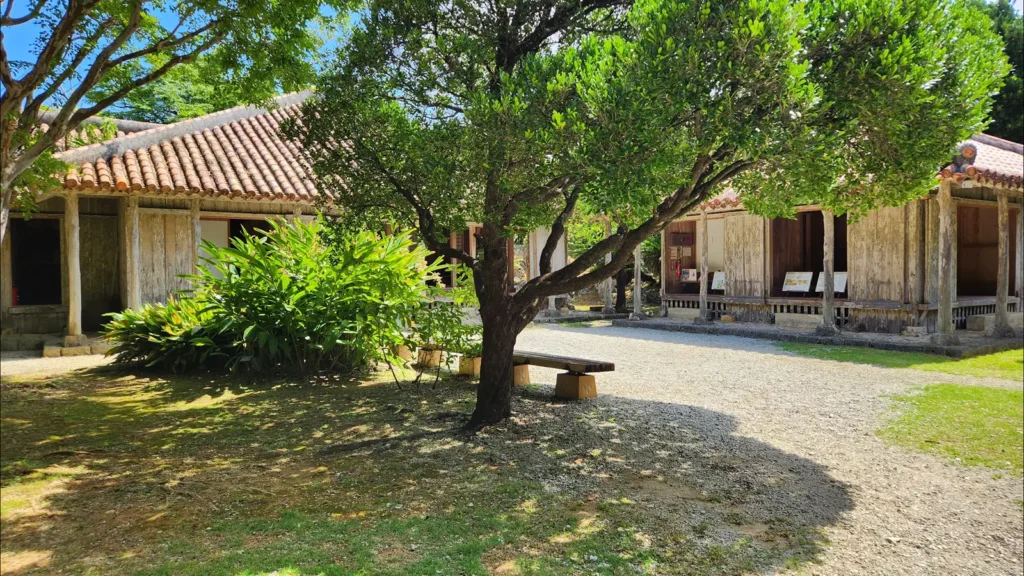
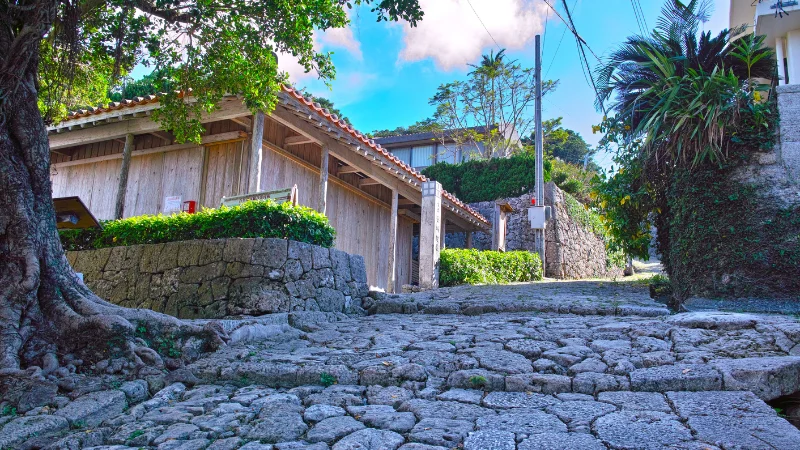
- The architecture and way of life, from ordinary dwellings to monumental constructions, with the Native Okinawa Village open to the public remaining a striking example.
- And of course, the cuisine, showcasing local products and the beverages that accompanied meals, which you will have the pleasure of tasting during your stay.
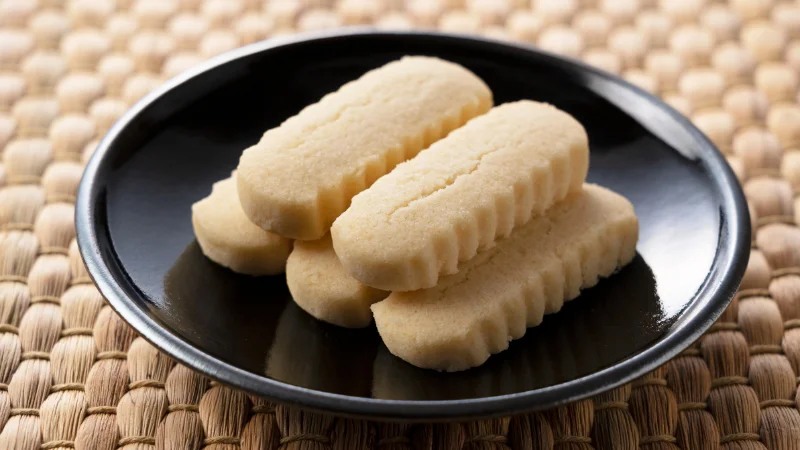
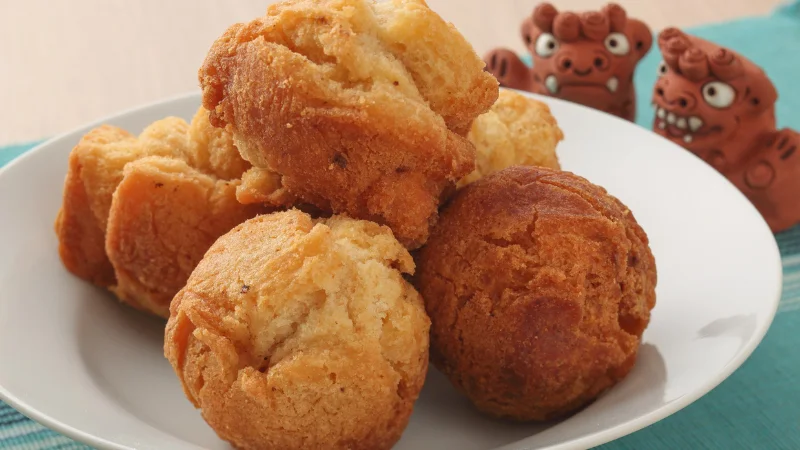
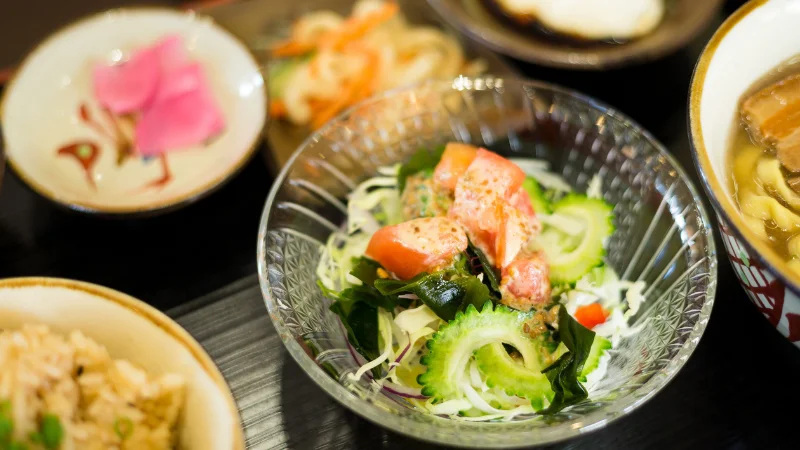
It is through these cultural fundamentals that I invite you to travel back in time, to rediscover the Ryukyu Kingdom beyond dates and battles.
All the themes I have listed are still accessible to the public today and can be experienced by everyone. These articles will allow you to become familiar with Okinawan culture before your trip.
Thus begins this series dedicated to the Ryukyu Kingdom.
If, among this list, a theme particularly speaks to you, simply click on the corresponding link. Each number in the list will take you directly to a complementary article, entirely dedicated to that specific subject.
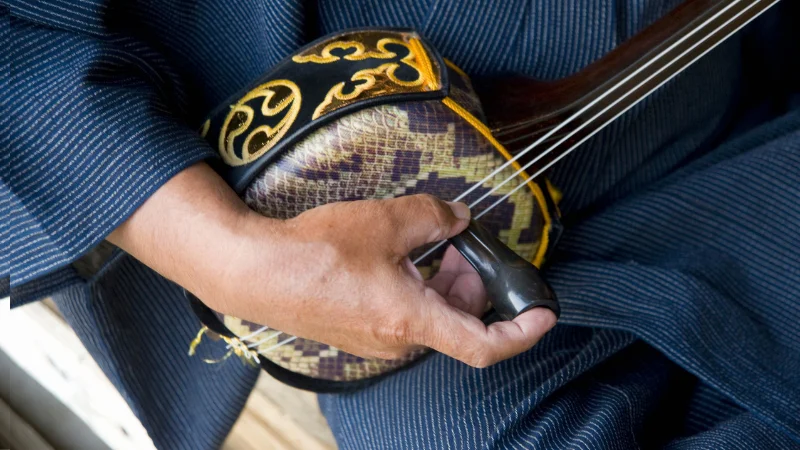
Discover Okinawa and the Ryukyu Kingdom in YouTube videos
To go even further in the discovery of Okinawa and its heritage, I also invite you to explore my videos available on my YouTube channel Japan Okinawa Daily Life. These filmed walks, always done on foot, offer an immersion different from that of written articles. By following these strolls, you will feel as if you are wandering yourself through the parks, the alleys, or the historical sites of the island.
Each video is subtitled so that everyone can fully enjoy the story. I share many anecdotes, observations, and explanations related to the places visited, but that I do not necessarily develop in my articles in order to avoid redundancy. Thus, blog and videos complement each other and offer you two different entry points to explore Okinawa.
If you like this approach, I invite you to subscribe to the channel: it is the best way to follow my next discoveries, through the landscapes and stories that the archipelago holds.

Click to watch the video
Click to watch the video on YouTube
Texts, images, and videos © Japan Okinawa Daily Life
Copying, downloading, and reuse are prohibited without permission